Atomic Spectra
Chem 3240 · Lecture 1.4
Spectroscopy: Light as a Fingerprint
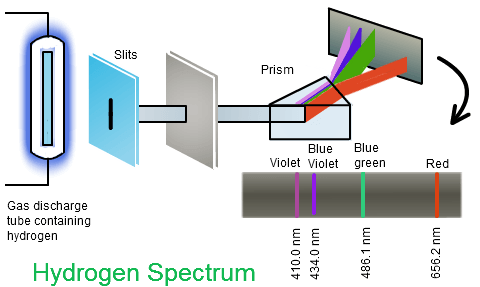
- Spectroscopy: interaction of matter and light
- Heated atoms emit at characteristic frequencies
- Spectrum is unique per element: an atomic fingerprint
- Reveals structure and composition
Discrete Lines, Not a Continuum
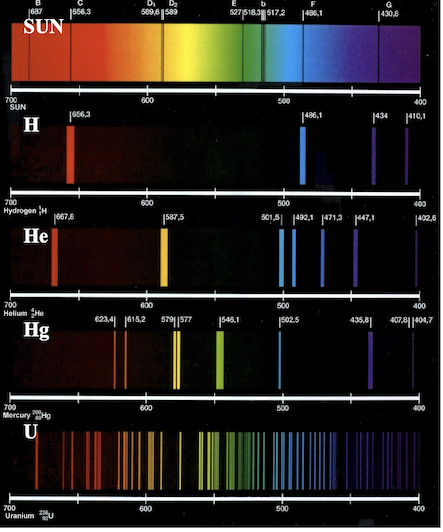
- Solar spectrum shows dark and bright lines
- Lines identify elements in the Sun’s atmosphere
- Discrete lines are impossible in classical mechanics
- A puzzle awaiting a new physics
Spectral Series
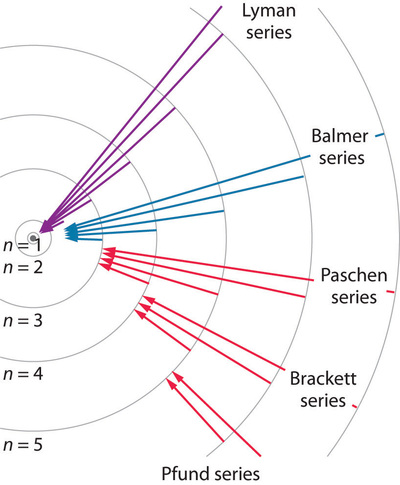
- Each series = all transitions to one lower level
- Lyman: \(n_1=1\)
- Balmer: \(n_1=2\)
- Paschen: \(n_1=3\)
- Named after their discoverers
Bohr’s Model (1913)
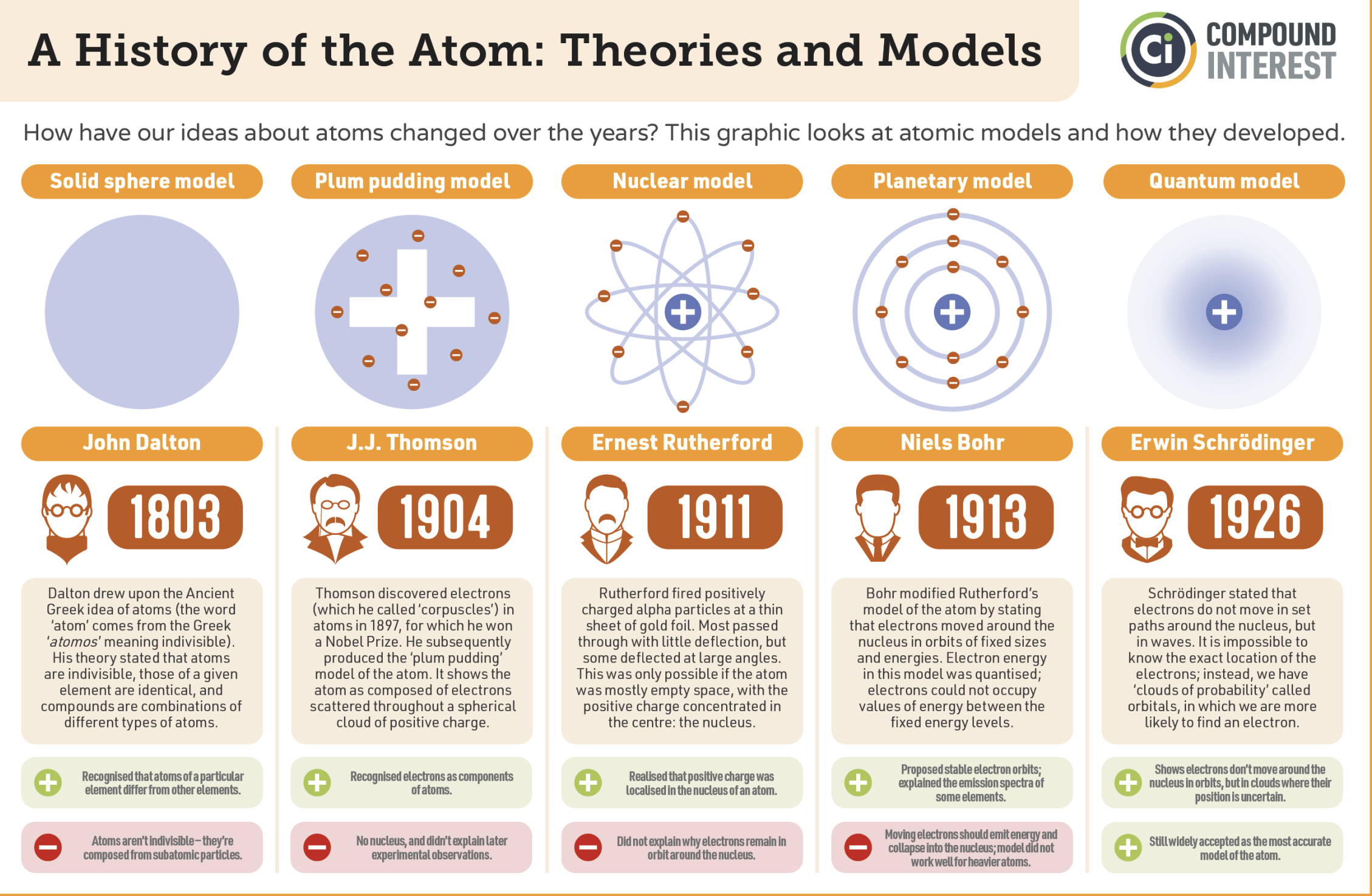
- Electron in circular orbits around a fixed proton
- New quantization rule stops the spiral into the nucleus
- Orbit must hold an integer number of standing waves, \(n=1,2,3,...\)
- Yields discrete energy levels labeled by \(n\)