Wave-Particle Duality
Chem 3240 · Lecture 1.5
Diffraction and Interference
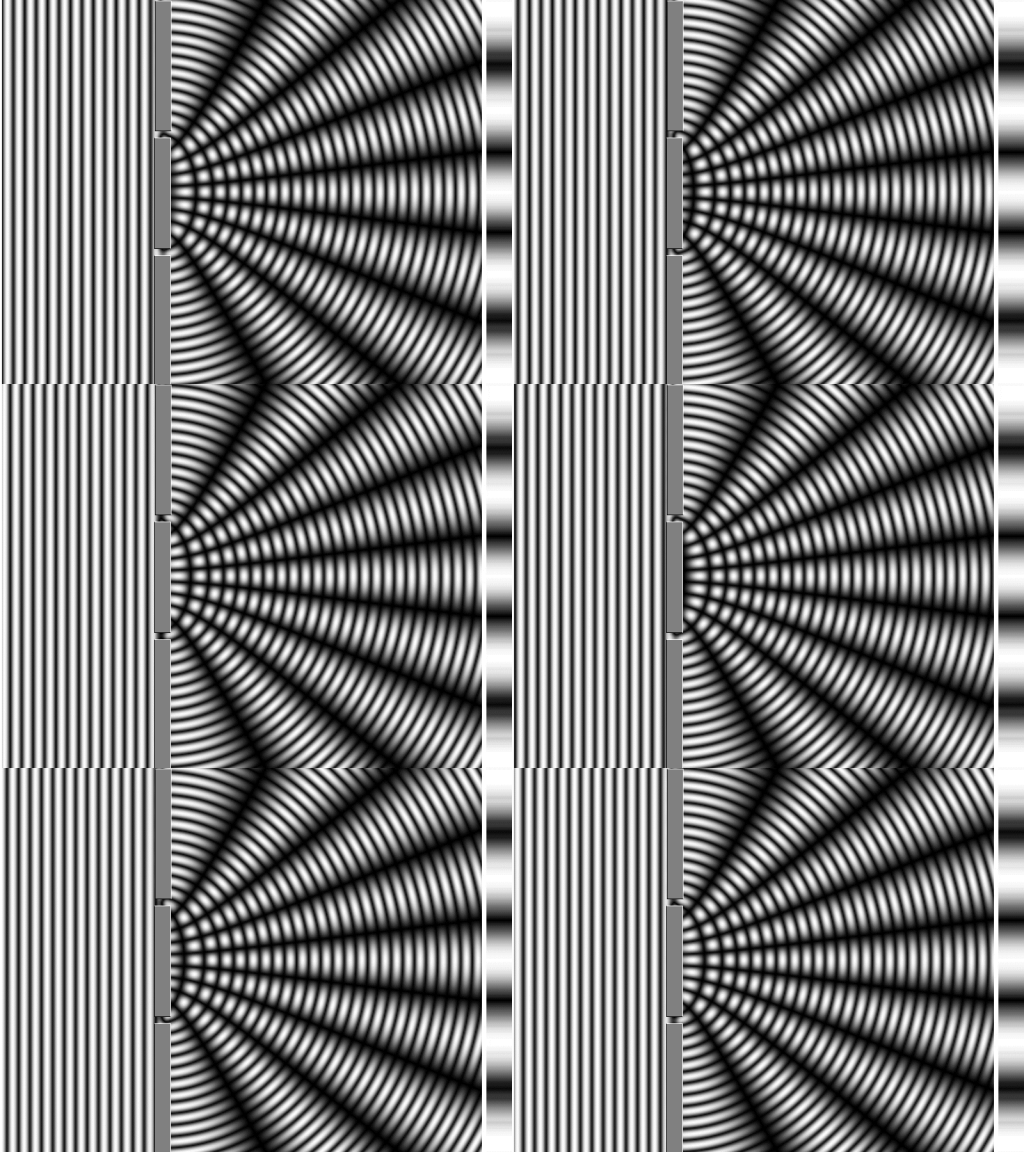
- Diffraction: waves spread around obstacles or through openings
- Interference: combined waves add (in phase) or cancel (out of phase)
- Double slit: two slits produce interference bands on the screen
Bragg’s Law: X-rays Scatter Off Crystals
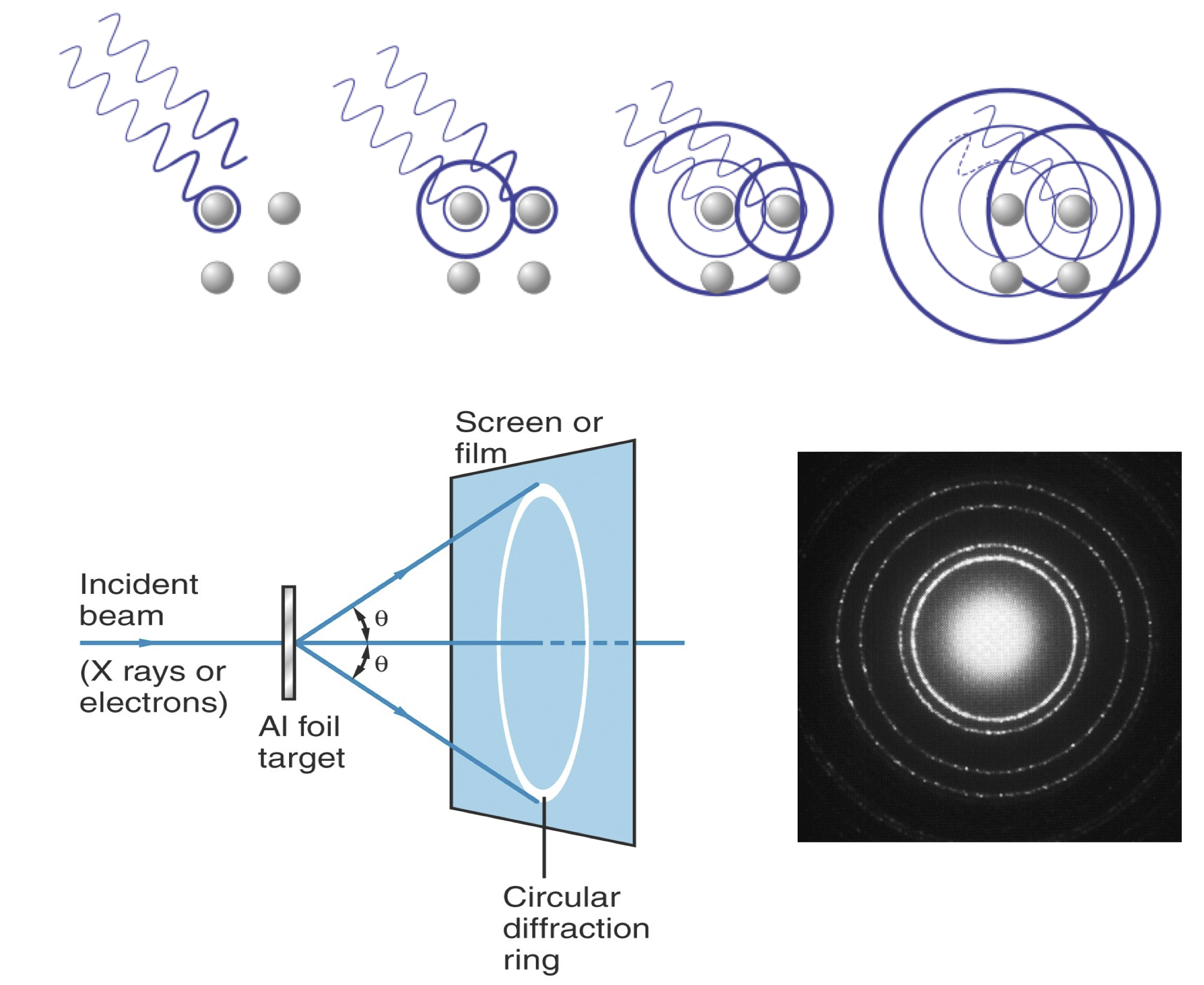
- X-rays scatter off lattice atoms
- Path differences give constructive (left) or destructive (right) interference
\[\boxed{2d \sin\theta = n\lambda}\]
- \(d\): plane spacing, \(\lambda\): wavelength, \(n\): diffraction order
- Interference was the hallmark of wave behavior
Electrons Also Diffract
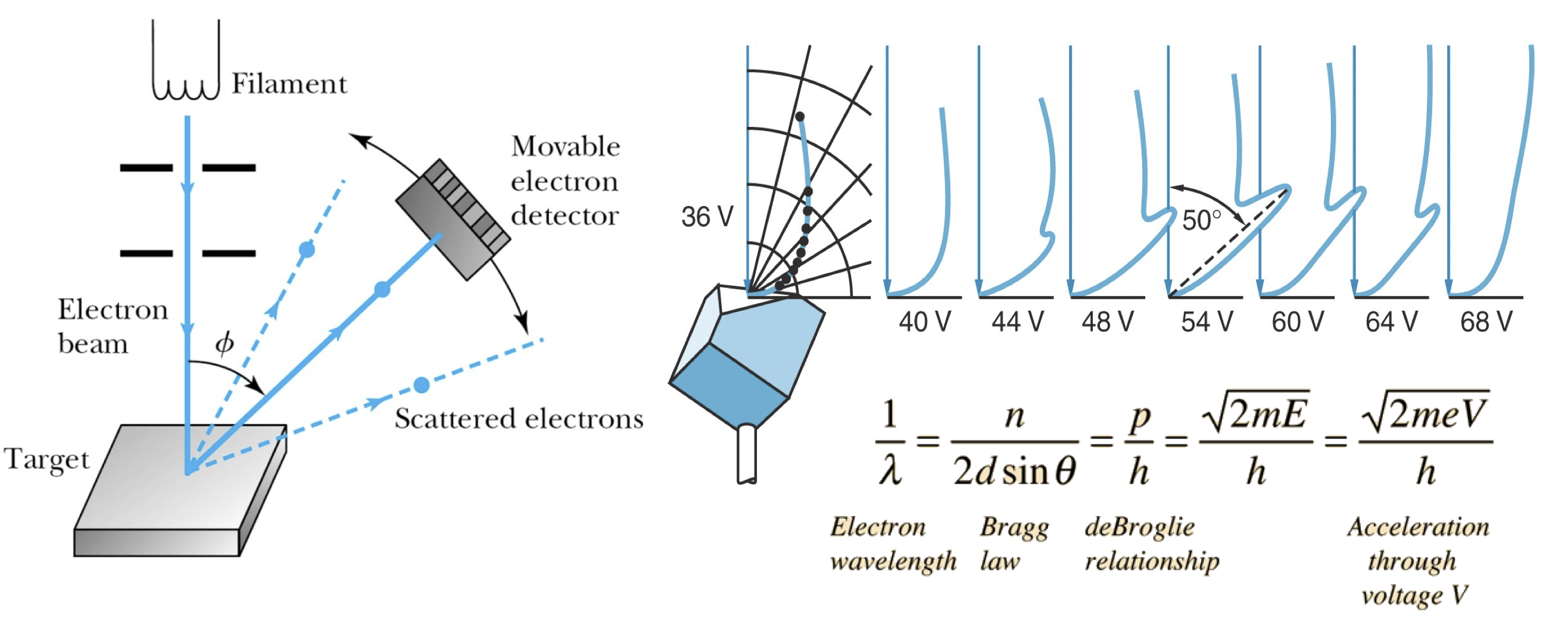
- Davisson and Germer (1925): intensity peaks in scattered electron beams
- Peaks fit Bragg’s law (until then only for X-rays)
- Electrons behave as waves
Compton Scattering: Light Has Momentum
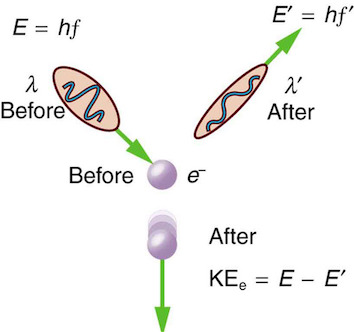
- X-rays scatter off free electrons like billiard balls
- Conservation of momentum gives longer outgoing wavelength
- Makes sense only if the photon is a particle with momentum
The Double-Slit Puzzle
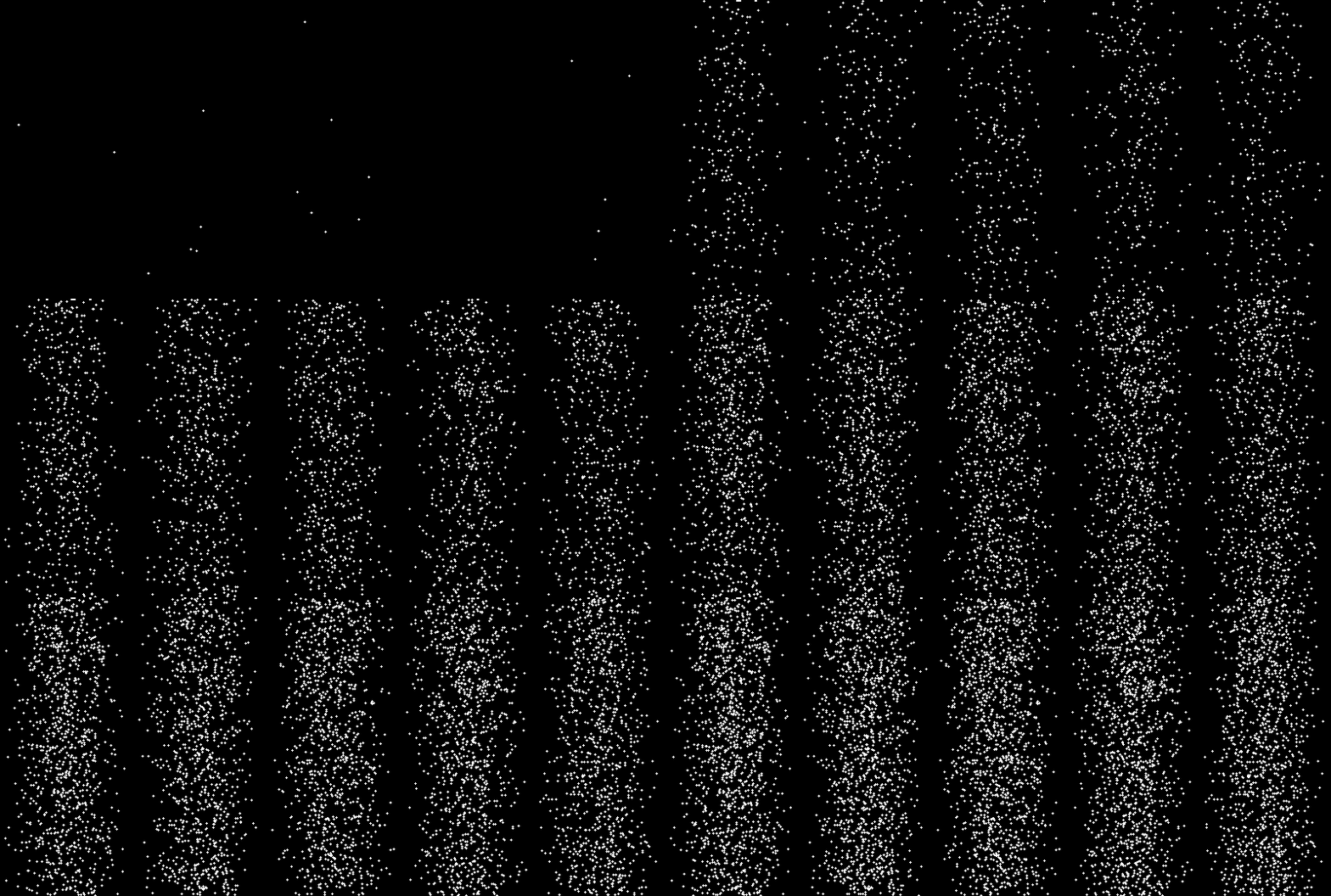
- Electrons build an interference pattern
- It persists even with one electron at a time
- Each electron interferes with itself
Which Slit?
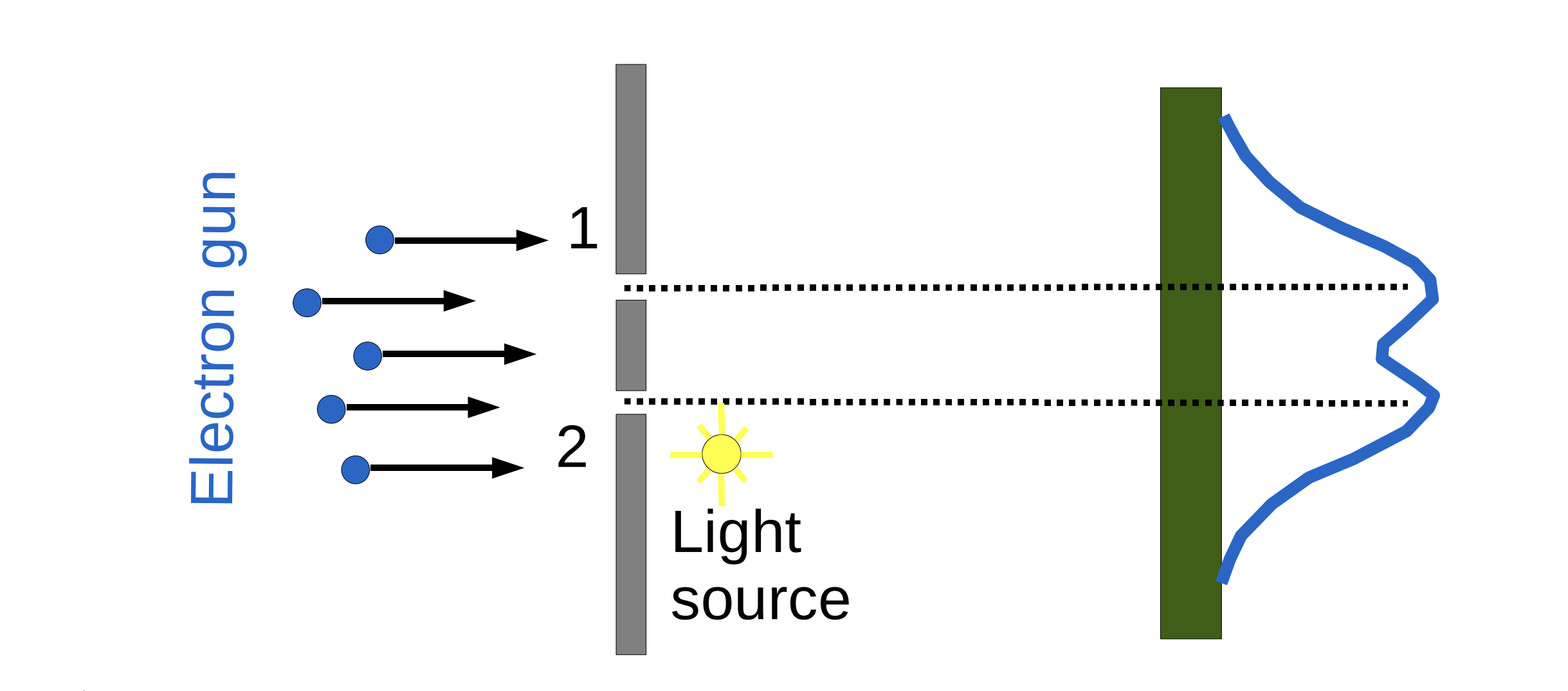
- Try to detect which slit the electron took
- The interference pattern disappears
- Measurement changes the outcome (resolved later via QM postulates)
Heisenberg’s Uncertainty Principle
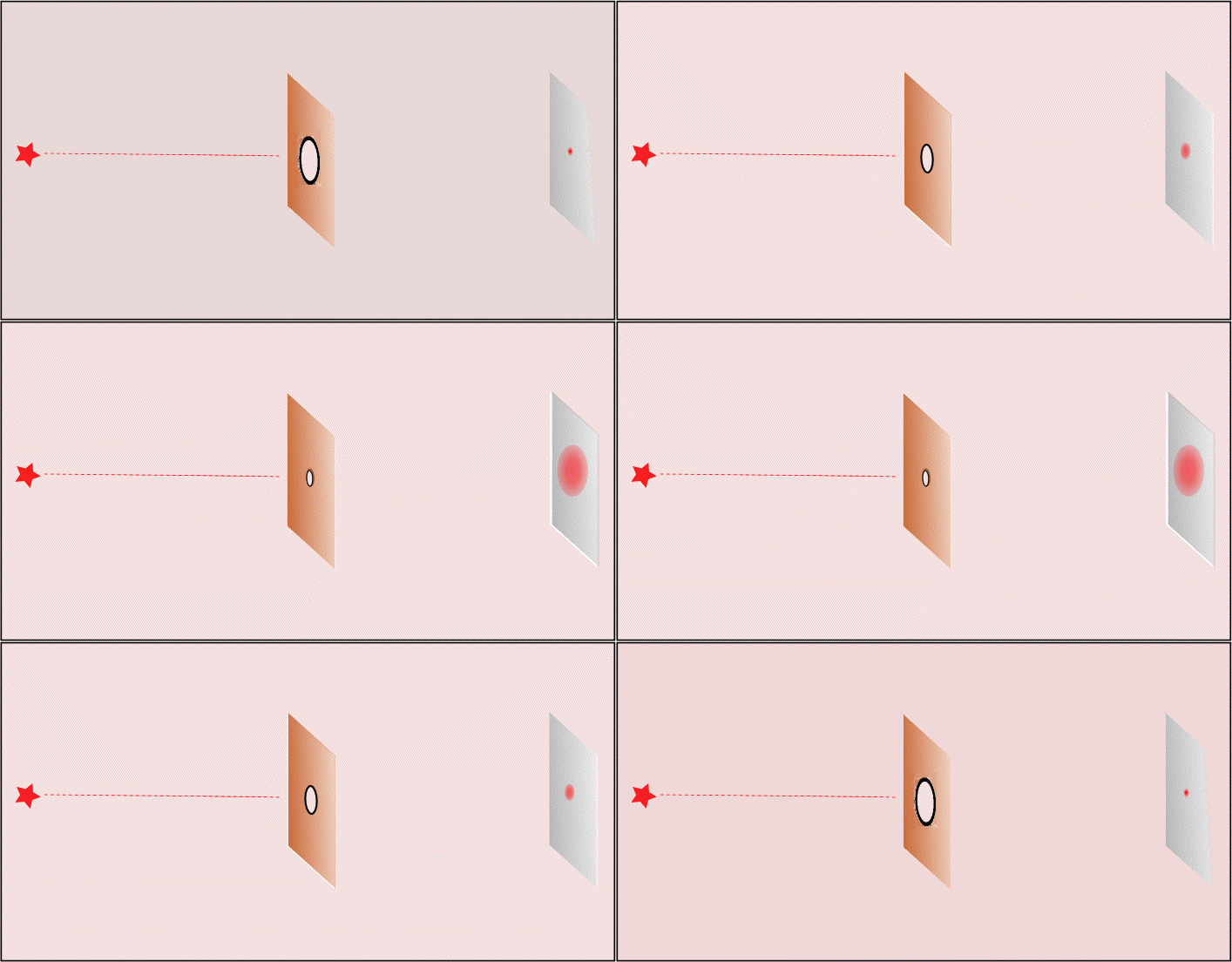
- Cannot know exact position and momentum at once
- Narrow the slit (localize \(x\)): momentum spreads out
- A direct consequence of wave-particle duality
\[\sigma_x \sigma_p \geq \hbar/2\]