Waves
Chem 3240 · Lecture 2.1
Why waves, in a chemistry course?
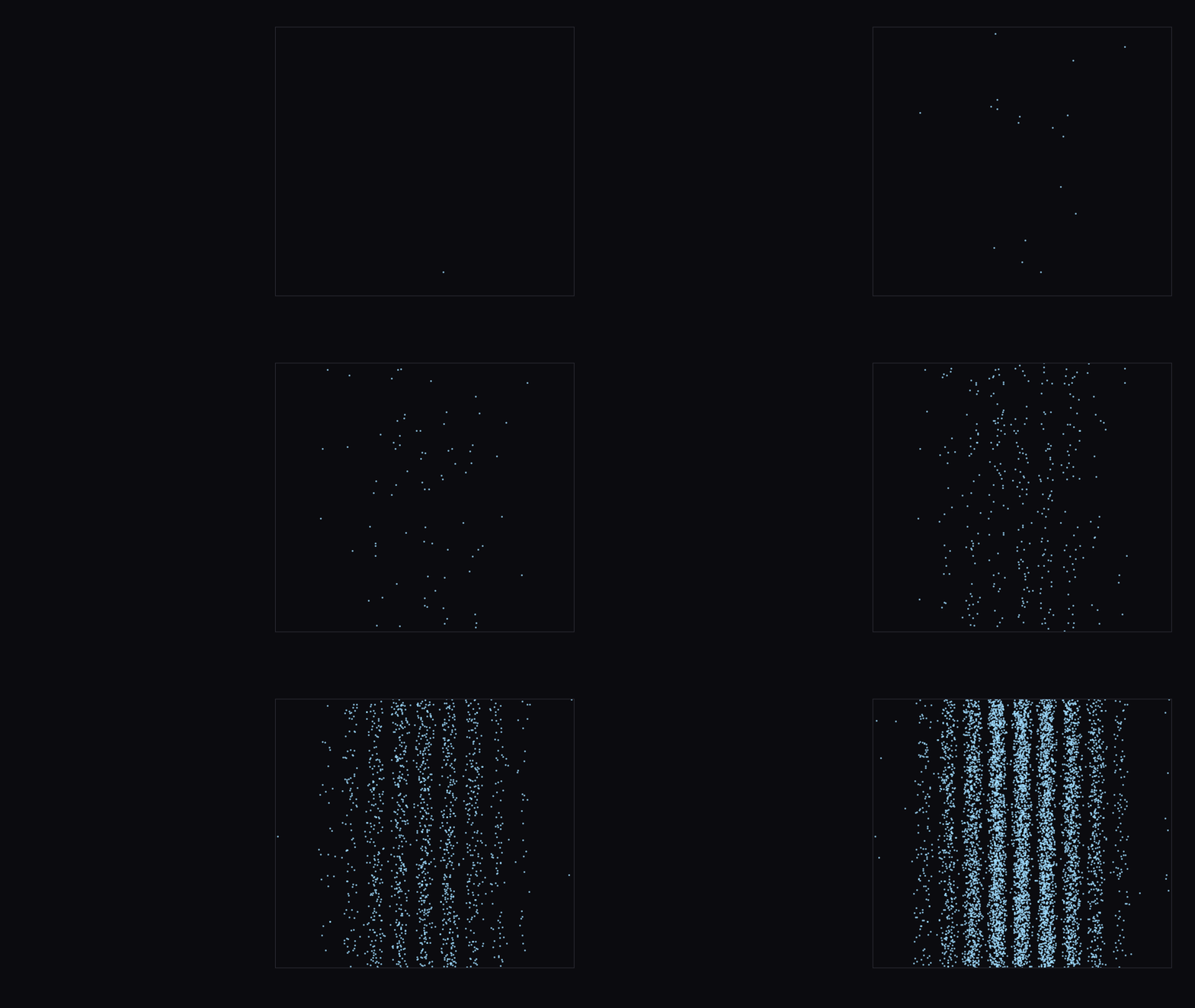
- Chapter 1: electrons diffract, and Bohr’s orbits are standing waves that have to fit
- Quantum mechanics is written in the language of waves
- Today: the vocabulary (\lambda, \nu, phase), the equation of motion of a wave, and how waves add
- Next lecture: waves with fixed ends produce integers
What is a wave?
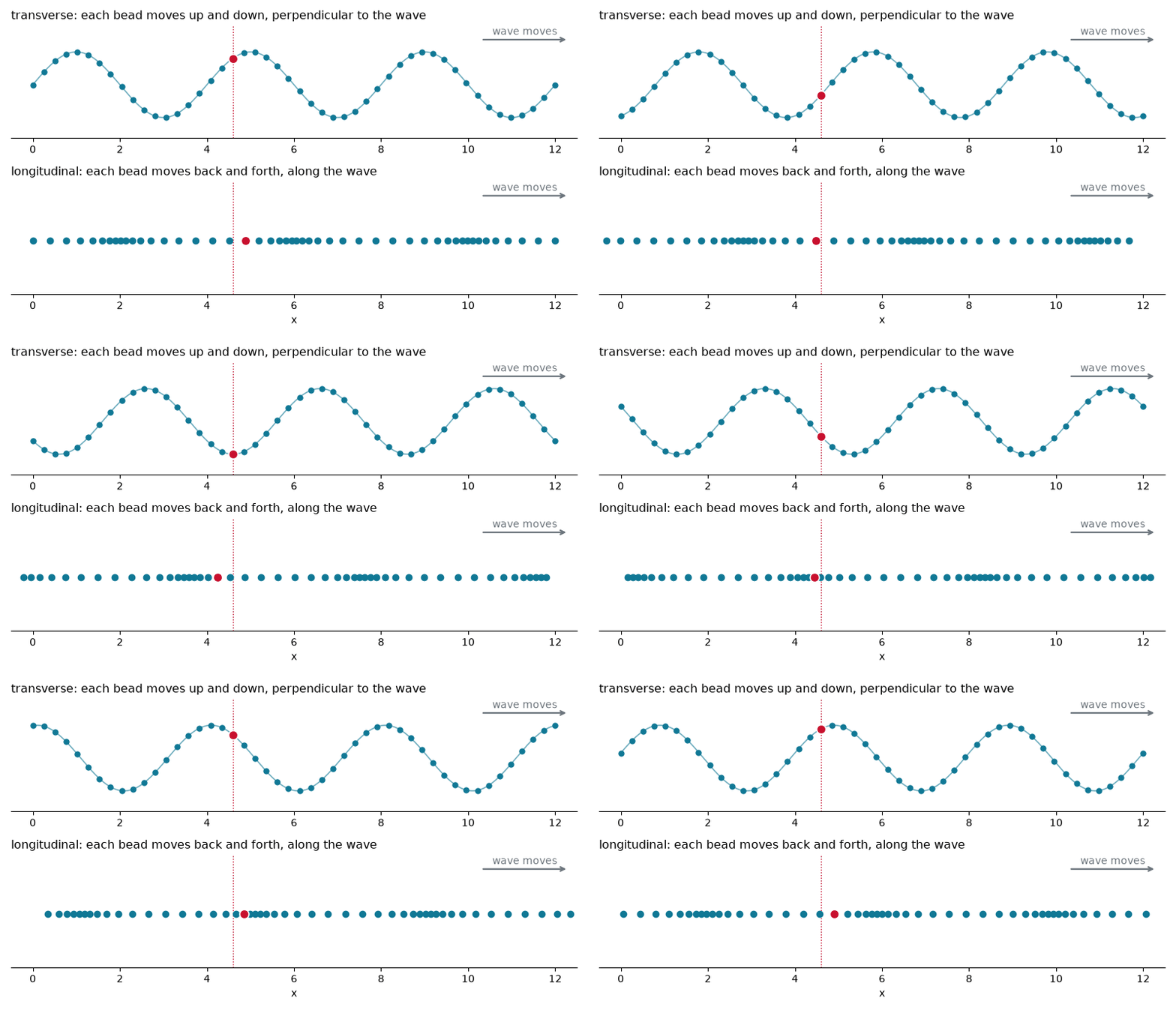
- A self-propagating disturbance: carries energy and information, not matter
- Transverse: medium moves perpendicular to travel (string, light)
- Longitudinal: medium moves along travel (sound)
- The red bead never travels; only the pattern does
A shape that moves: f(x - vt)
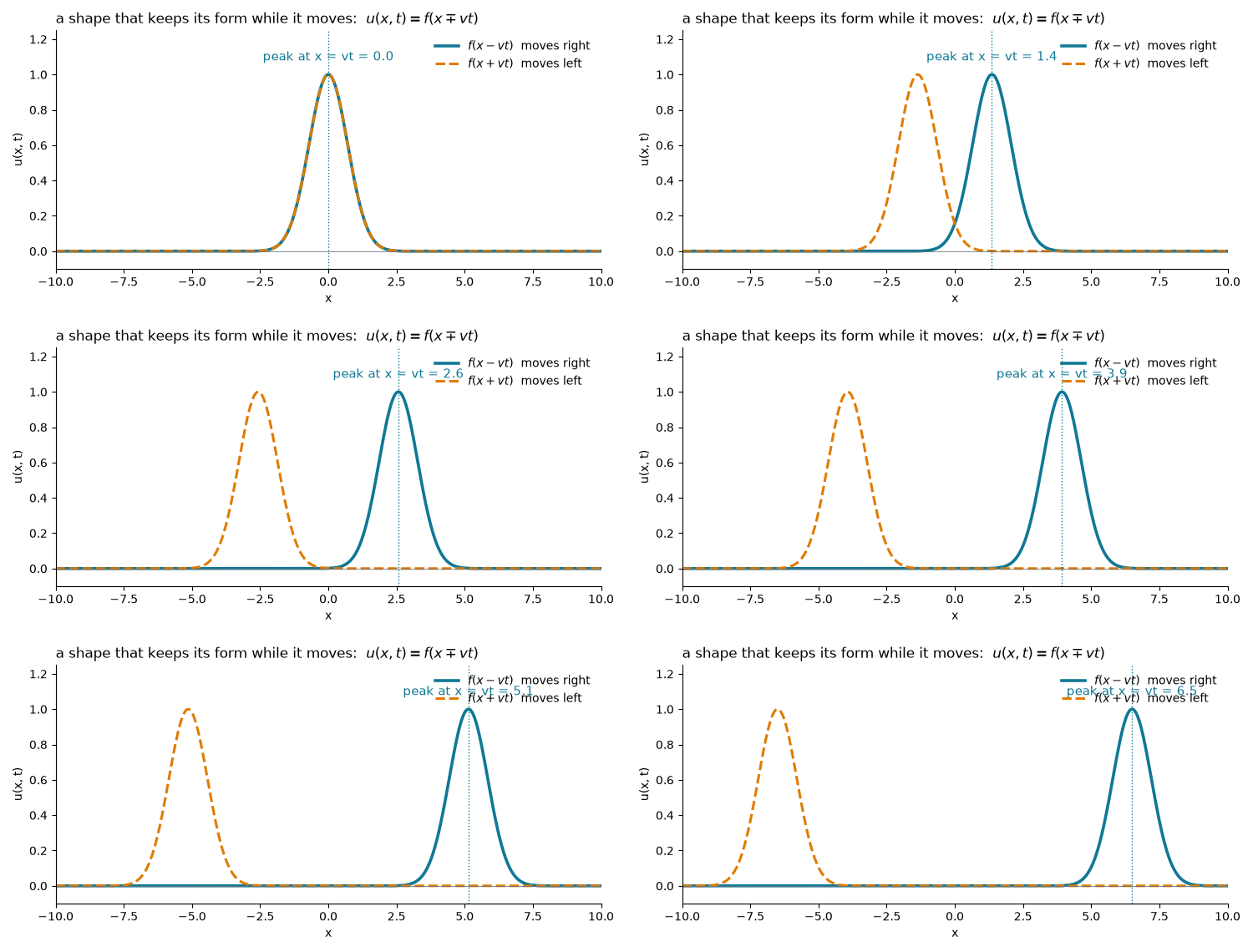
- Surfer rides the wave: shape frozen at x'
- Shore sees it slide: x = x' + vt
u(x,t) = f(x') = f(x - vt)
- Hold the peak fixed: x - vt = \text{const} moves right at speed v
- f(x + vt) moves left
Periodic traveling waves
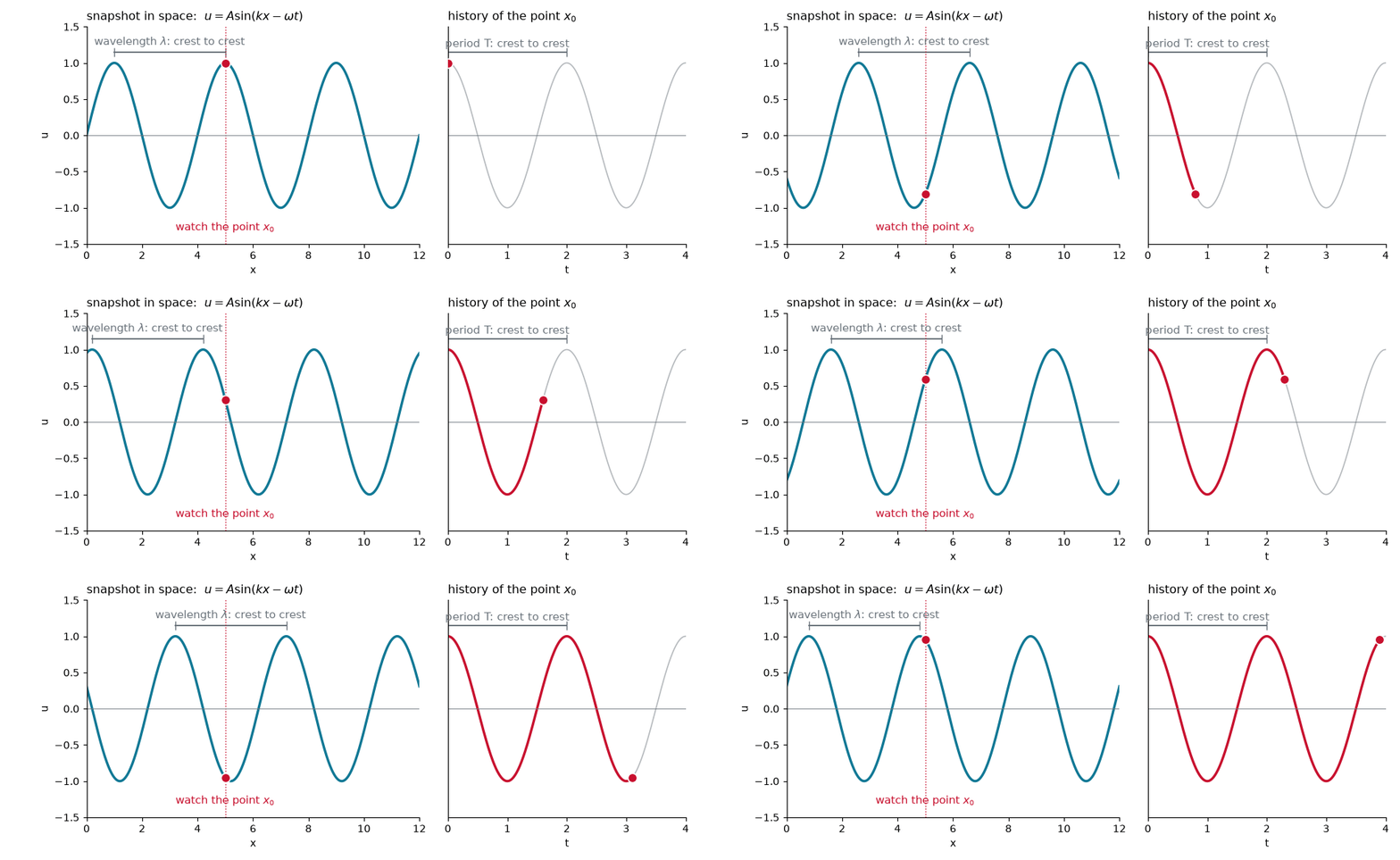
u(x,t) = A\sin(kx - \omega t + \phi)
- Amplitude A, wave number k, angular frequency \omega = kv, phase \phi
Complex representation
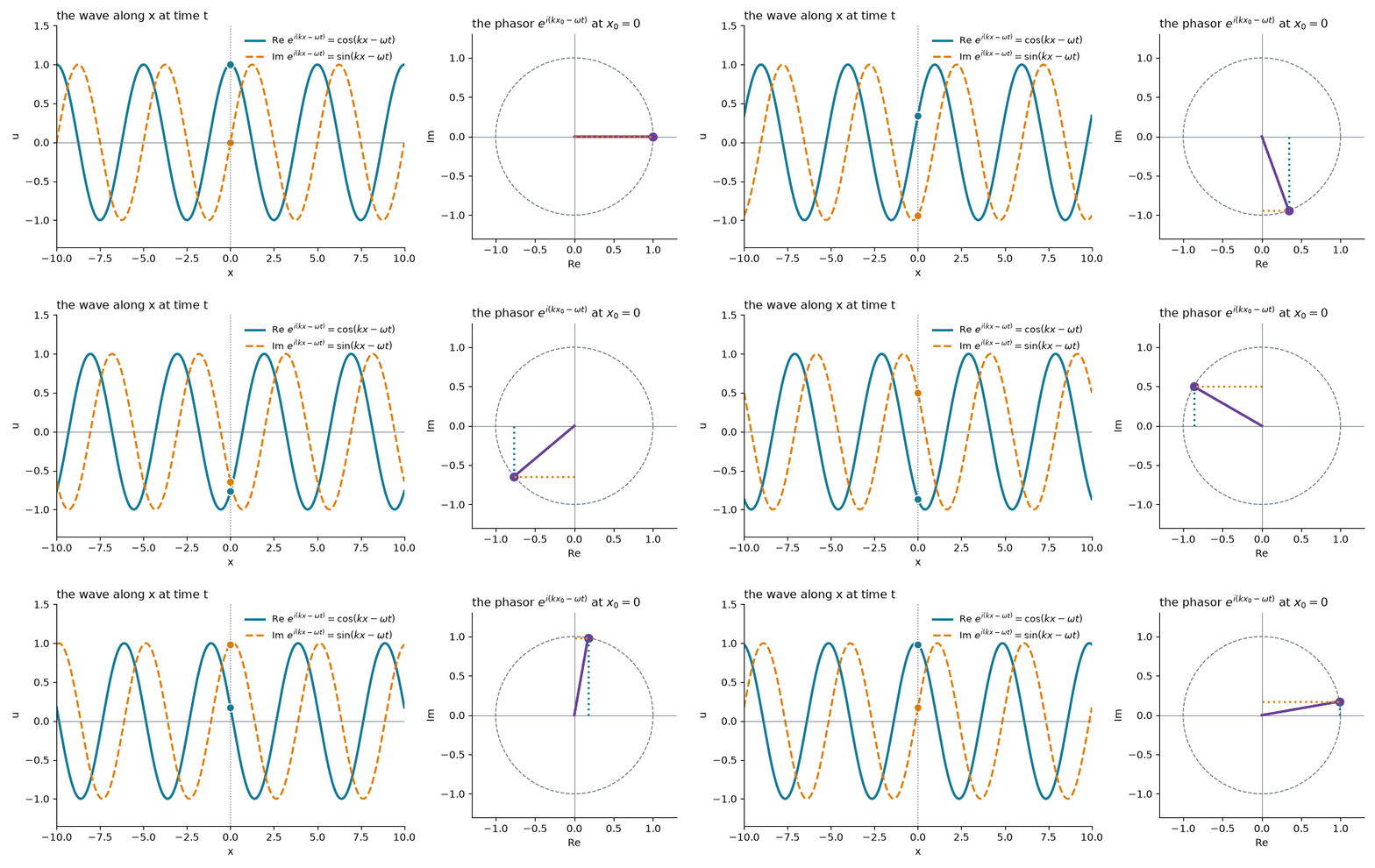
u(x,t) = Ae^{i(kx - \omega t)}
- Real part cosine, imaginary part sine
- At fixed x: a phasor turning at rate \omega
- Derivatives become multiplications by ik and -i\omega
- Take the real part at the very end
What the equation says: curvature pulls
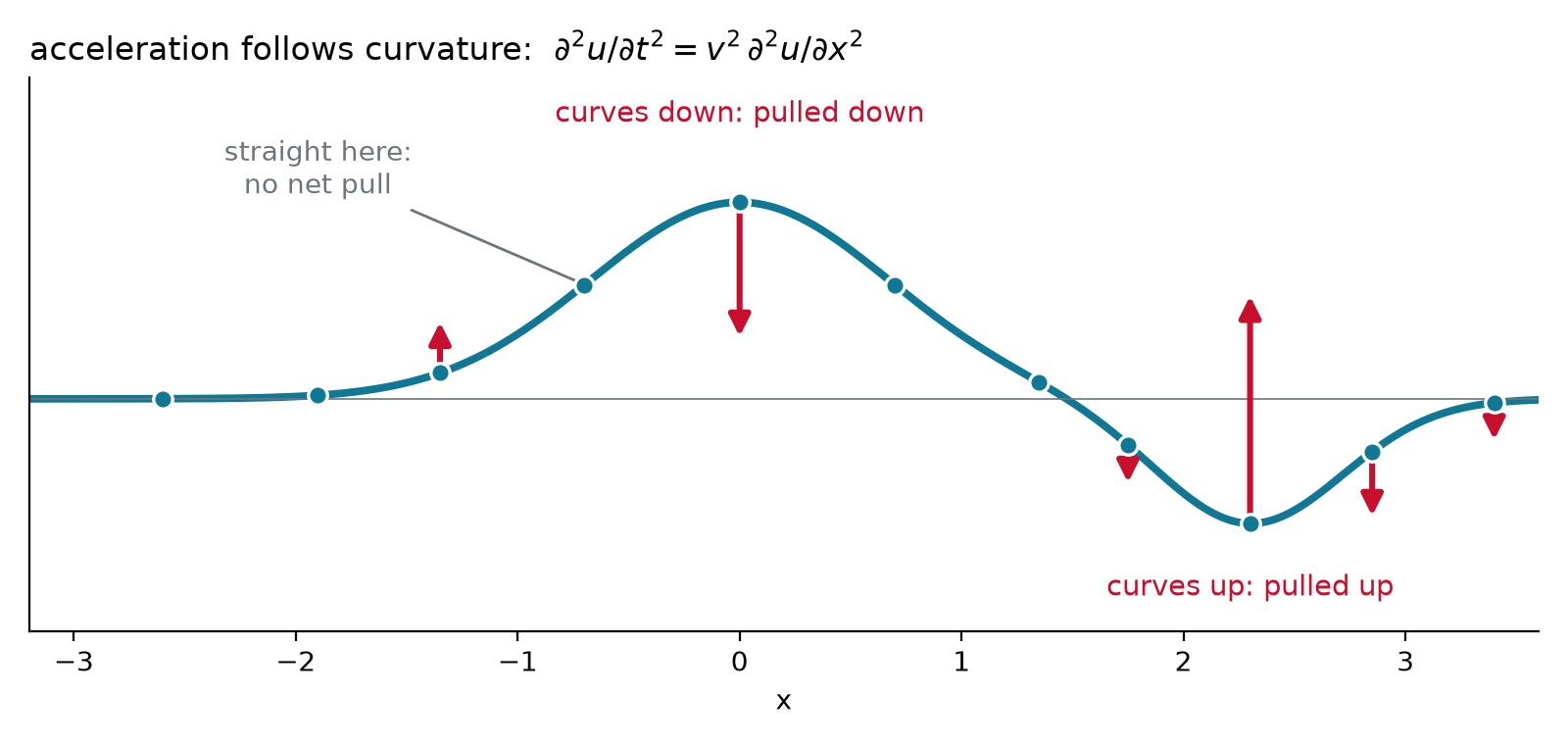
- Newton’s law for a piece of string: acceleration follows curvature. Neighbors pull a trough up and a crest down; a straight piece feels nothing
- v^2 = \mathcal{T}/\mu, tension over mass per length: tighter or lighter strings carry faster waves
Superposition and interference
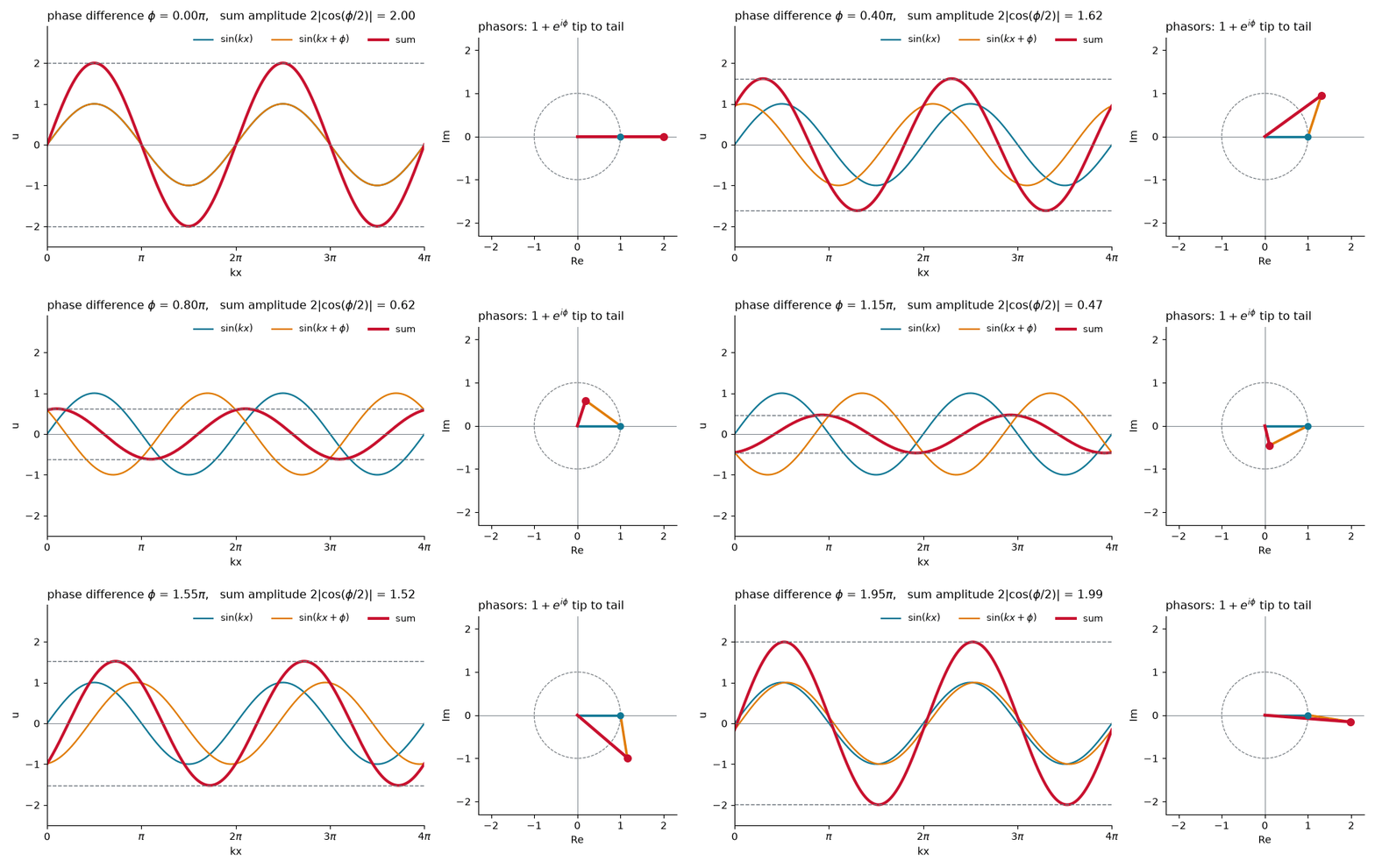
- Linear equation: u_A + u_B is again a solution
- Equal waves, phase difference \phi:
\text{sum} = 2\cos\tfrac{\phi}{2}\; e^{i(\theta + \phi/2)}
- \phi = 0: amplitude doubles
- \phi = \pi: waves cancel
Standing waves: two waves, opposite directions
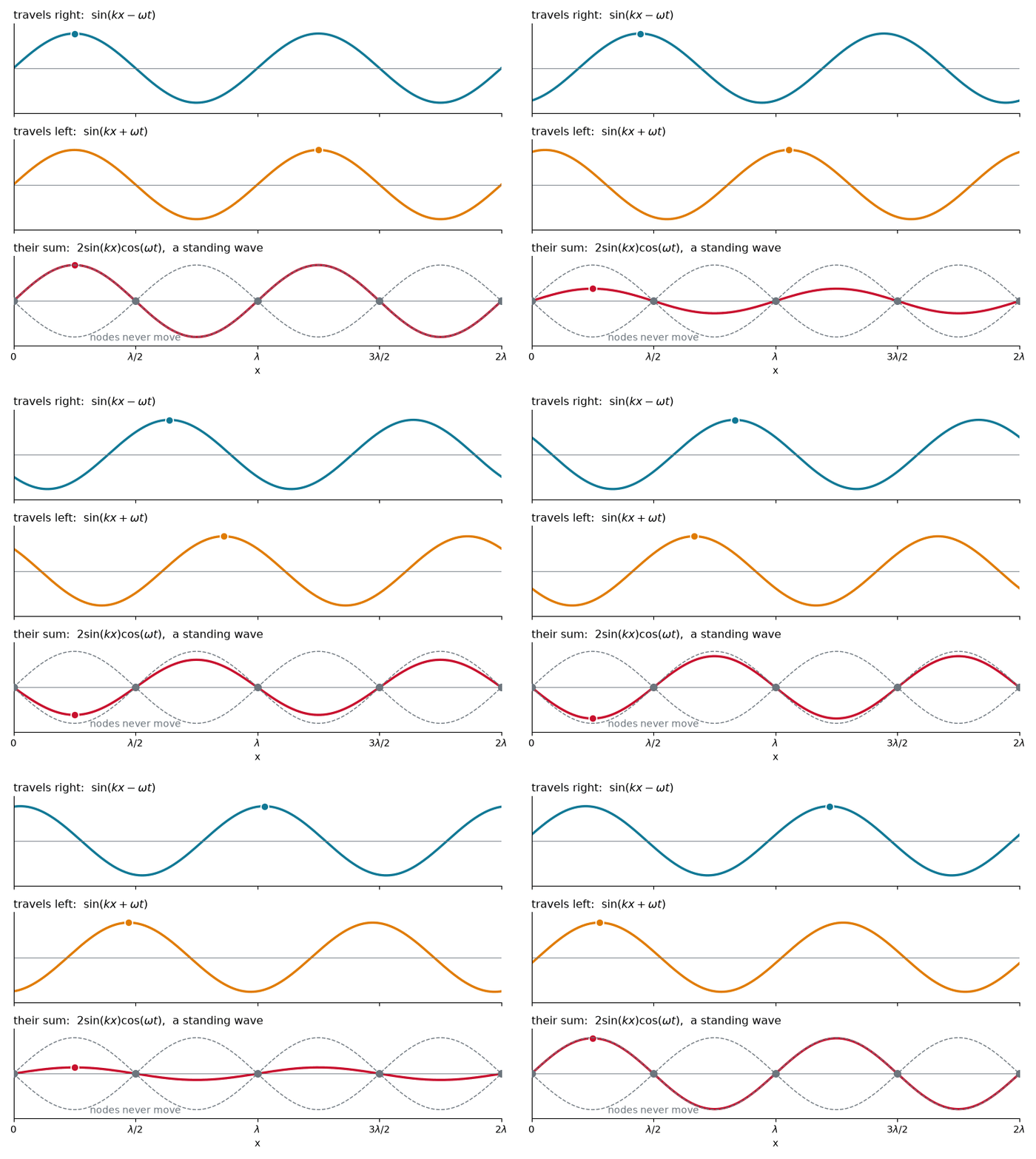
- x and t separate: the shape \sin kx stays put, its height \cos\omega t oscillates
- Nodes at kx = n\pi, spaced \lambda/2, never move
- Clamped ends must be nodes: only L = n\lambda/2 fits
\sin(kx-\omega t) + \sin(kx+\omega t) = 2\sin(kx)\cos(\omega t)
The light clock: moving clocks run slow
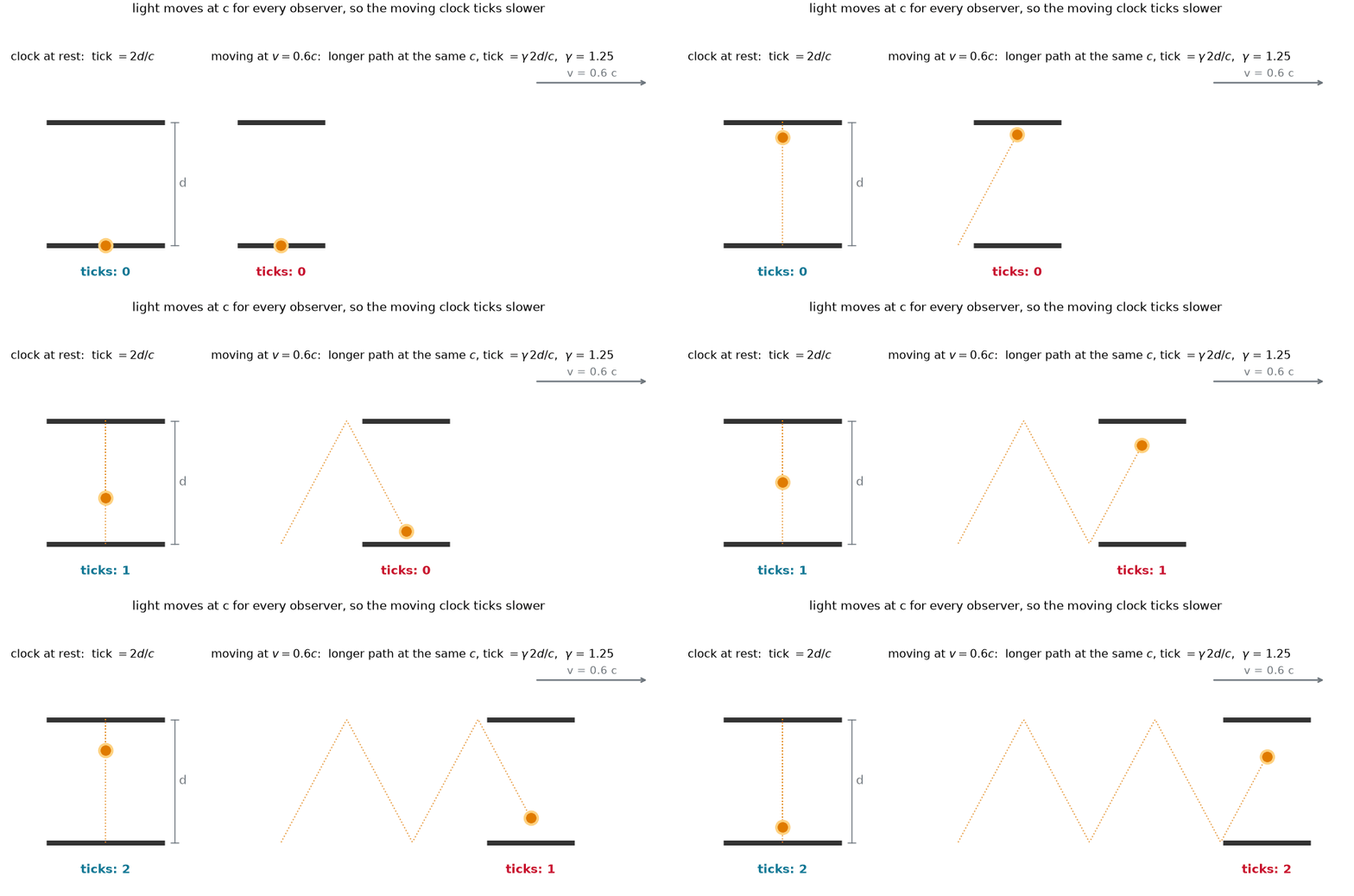
\Delta t = \gamma\,\Delta t_0, \qquad \gamma = \frac{1}{\sqrt{1 - v^2/c^2}}
- Same c, longer zigzag, slower tick
- Gold’s inner electrons: v/c \approx 0.6, which is why gold is yellow