One Path or Many
Chem 3240 · Lecture 3.1b · from Newton to Feynman
Phase space: a state is a point
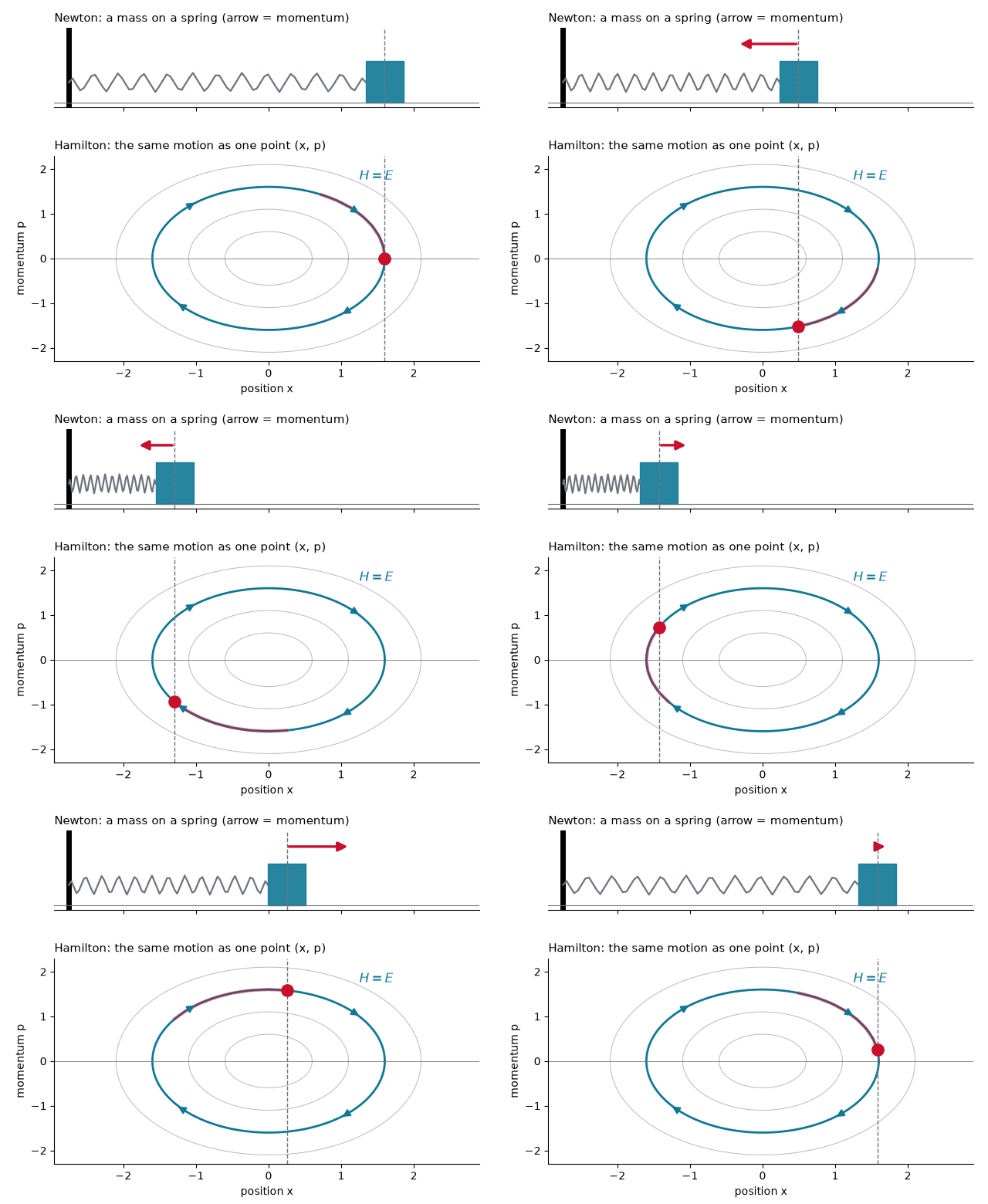
- A classical state is position and momentum together: one point (x, p)
- Newton follows the mass; Hamilton follows the point
- The point never leaves its curve H = E
Energy conservation, pictured
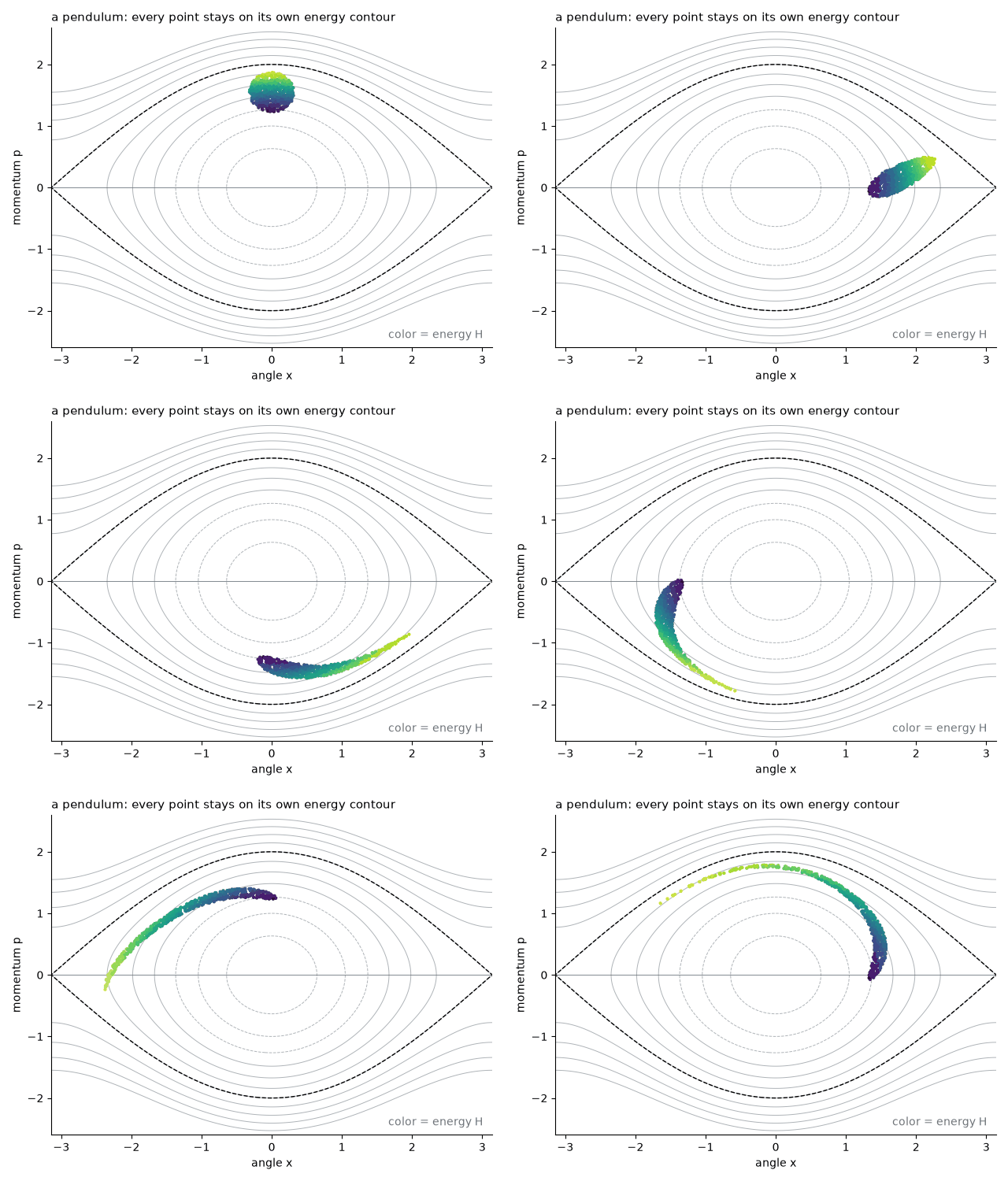
Any quantity A(x, p) changes as
\frac{dA}{dt} = \{A, H\}
\{A,B\} = \frac{\partial A}{\partial x}\frac{\partial B}{\partial p} - \frac{\partial A}{\partial p}\frac{\partial B}{\partial x}
- \{H, H\} = 0: the energy never changes
- \{x, p\} = 1 becomes [\hat{x}, \hat{p}] = i\hbar
Least action: nature picks one path
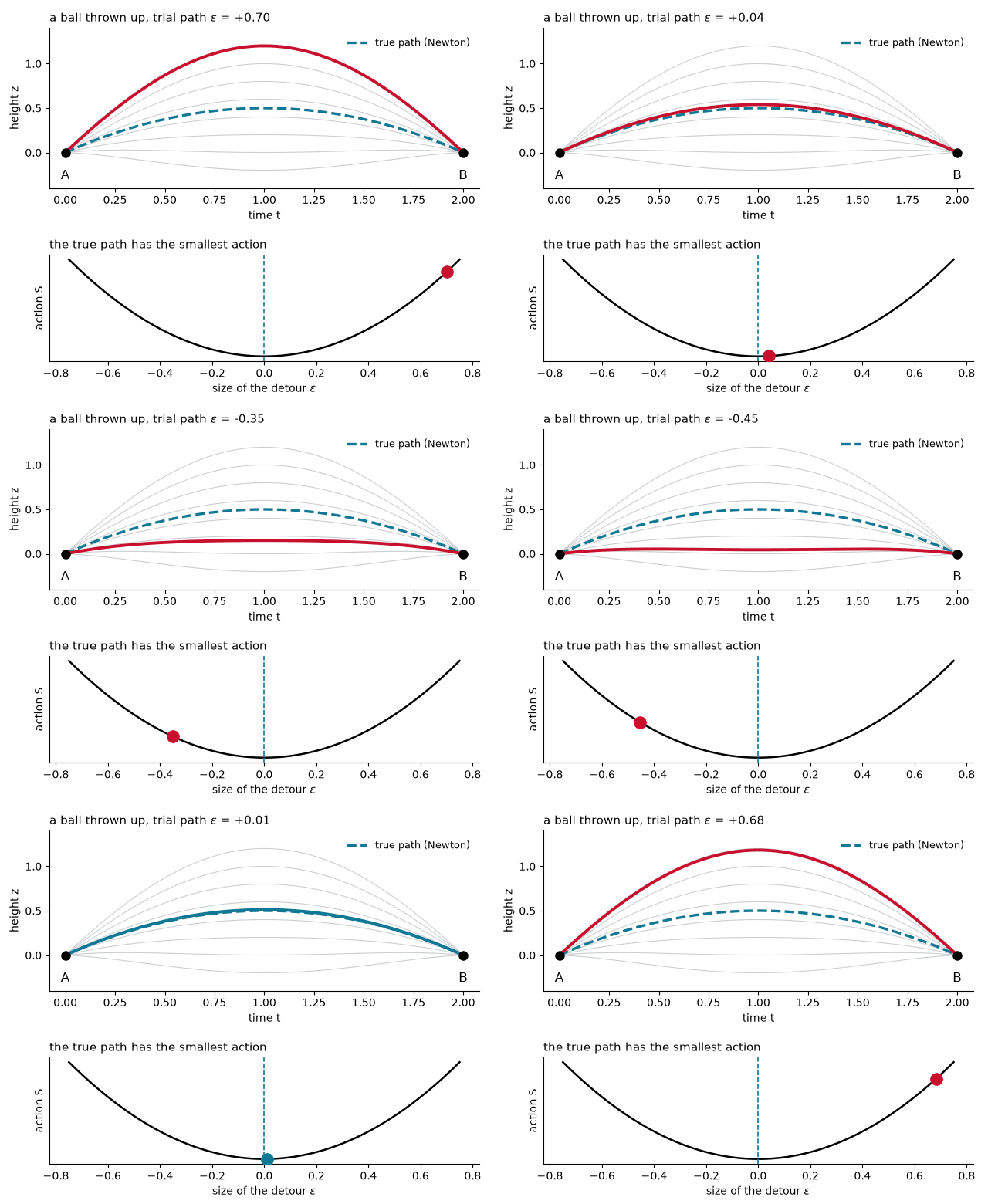
- Try every path from A to B (K: kinetic energy)
S = \int_{t_A}^{t_B} (K - V)\,dt
\delta S = 0
- Only one path makes S stationary, and it obeys Newton’s law
One path or many? Feynman drills holes
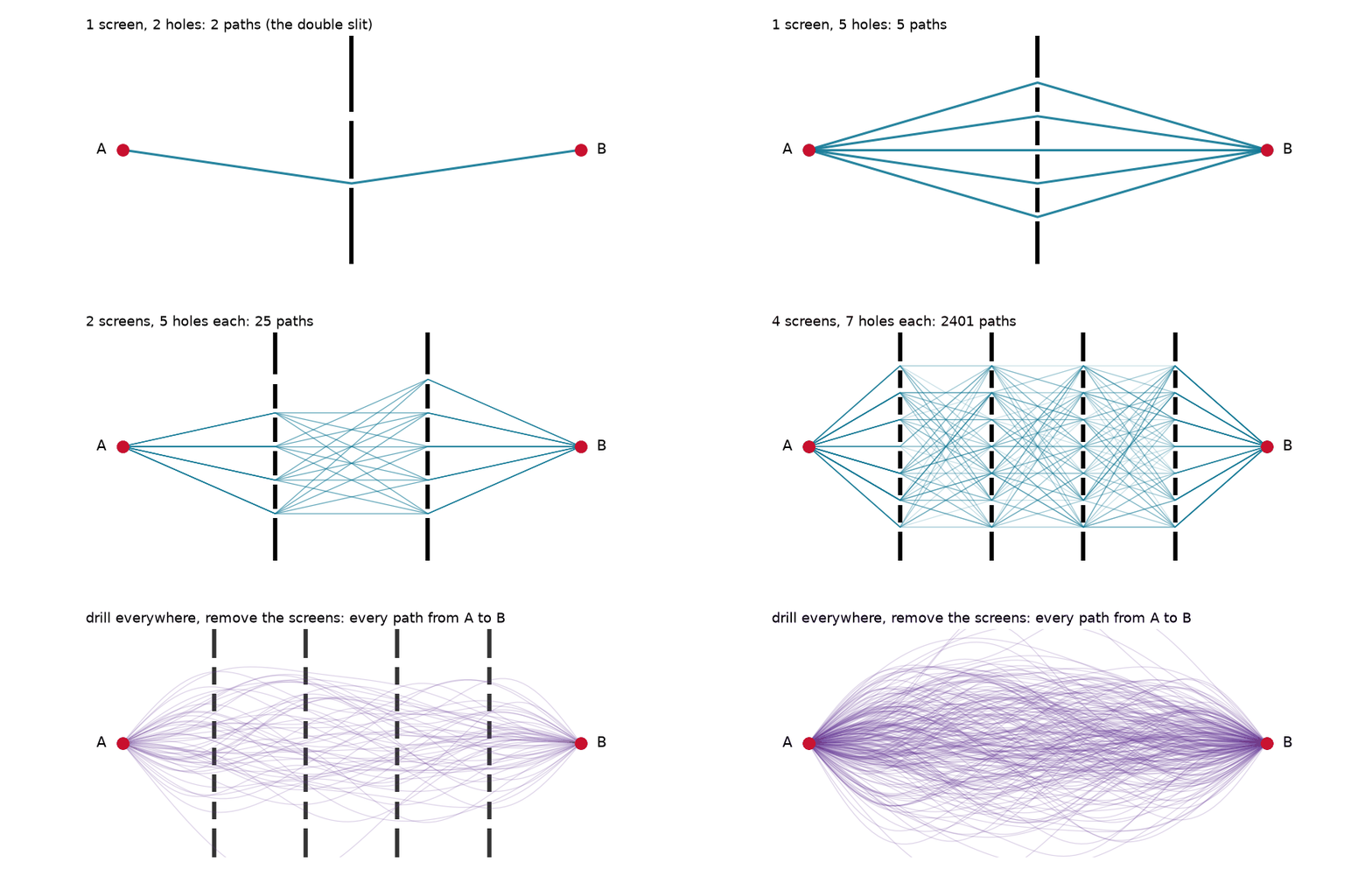
- Two holes: the electron takes both paths, the double slit
- More holes, more screens, then no screens at all: every path from A to B
Every history at once
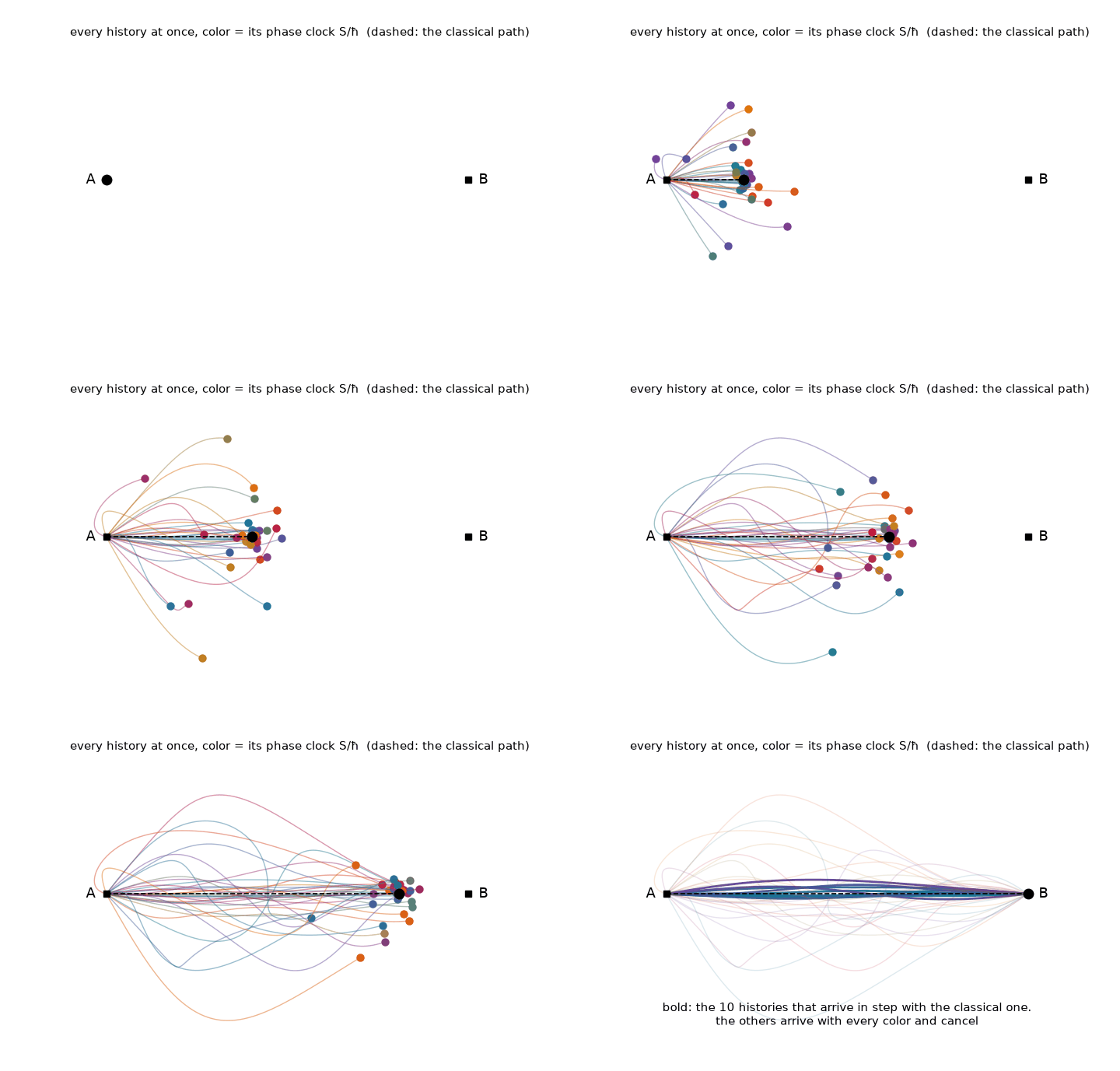
- The particle does not choose: every history contributes
- Each carries a phase clock, turned by its action S/\hbar
- Real histories or bookkeeping? The equations do not say; interpretations disagree (Everett: many worlds)
Every path adds an arrow
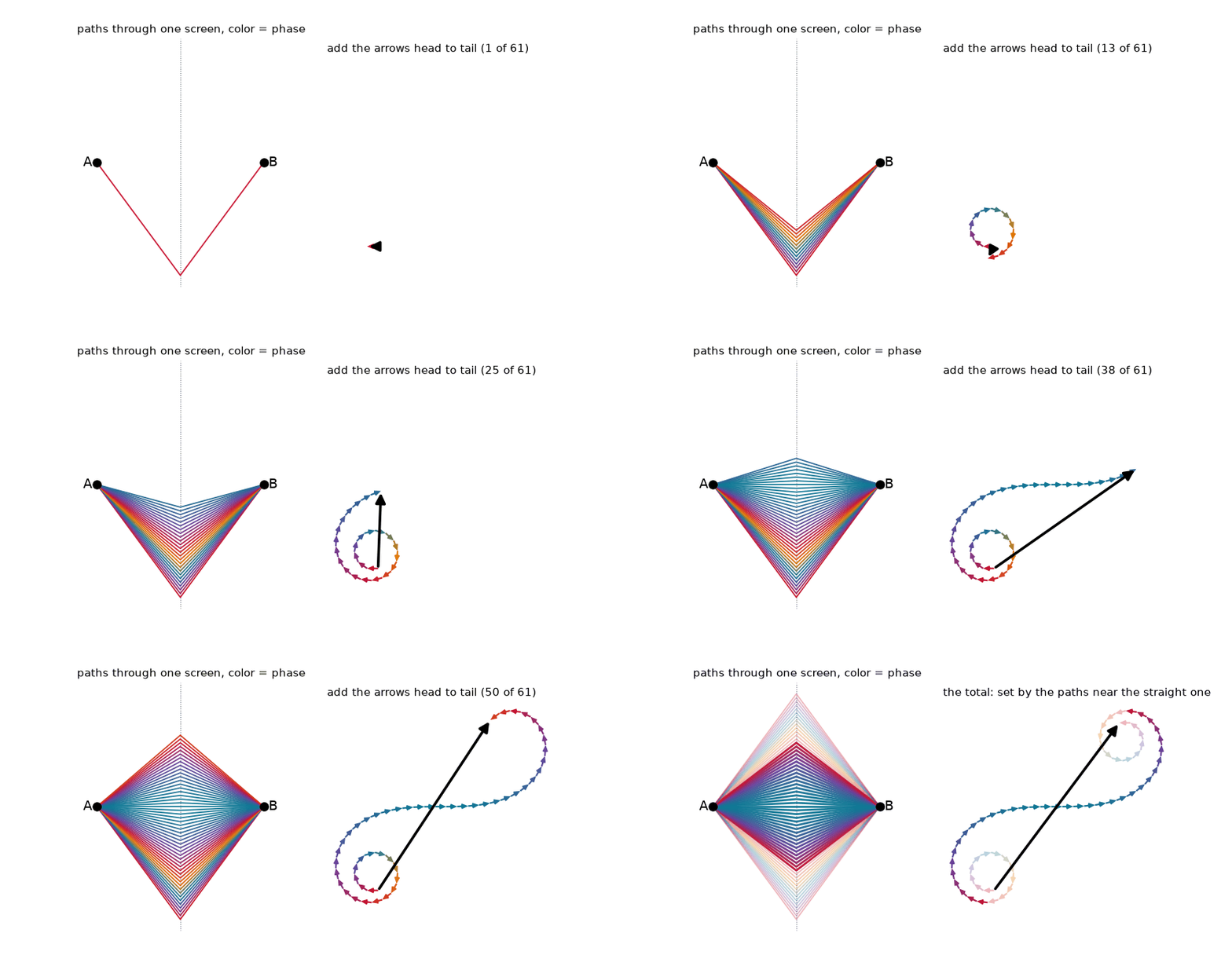
\psi(B) \;\propto \sum_{\text{paths}} e^{\,iS/\hbar}
- Each path: an arrow turned by S/\hbar
- Near the straight path the arrows line up; far ones curl up and cancel
- Free particle: S/\hbar is the phase (px - Et)/\hbar of the wave in Lecture 3.1
Turn down \hbar: one path returns
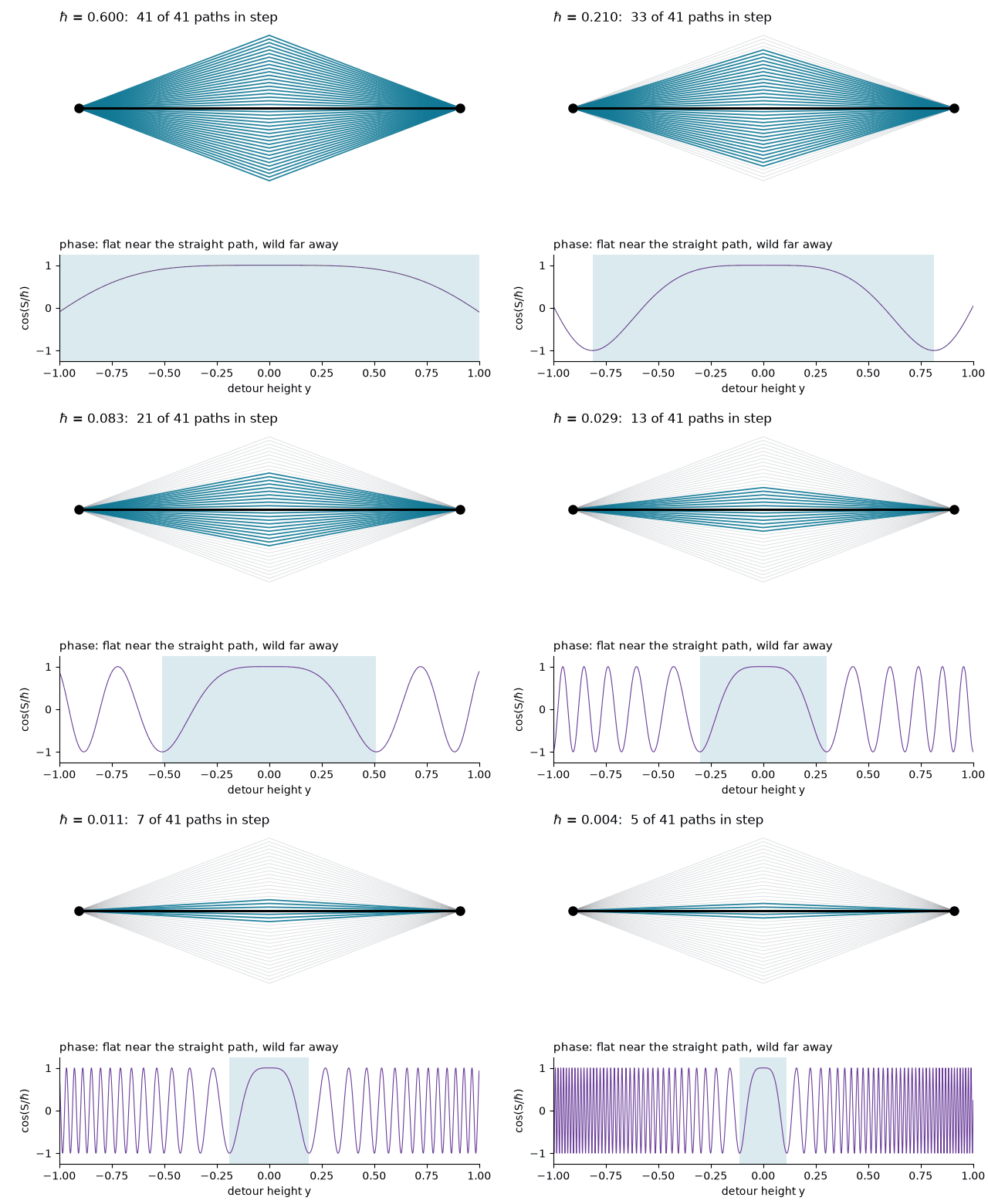
- Paths stay in step while \Delta S \lesssim \pi\hbar: a band of width \sim\sqrt{\hbar T/m}
- Small \hbar or large m: the band shrinks onto the classical path
- Classical mechanics is the \hbar \to 0 limit
Superposition makes the blur
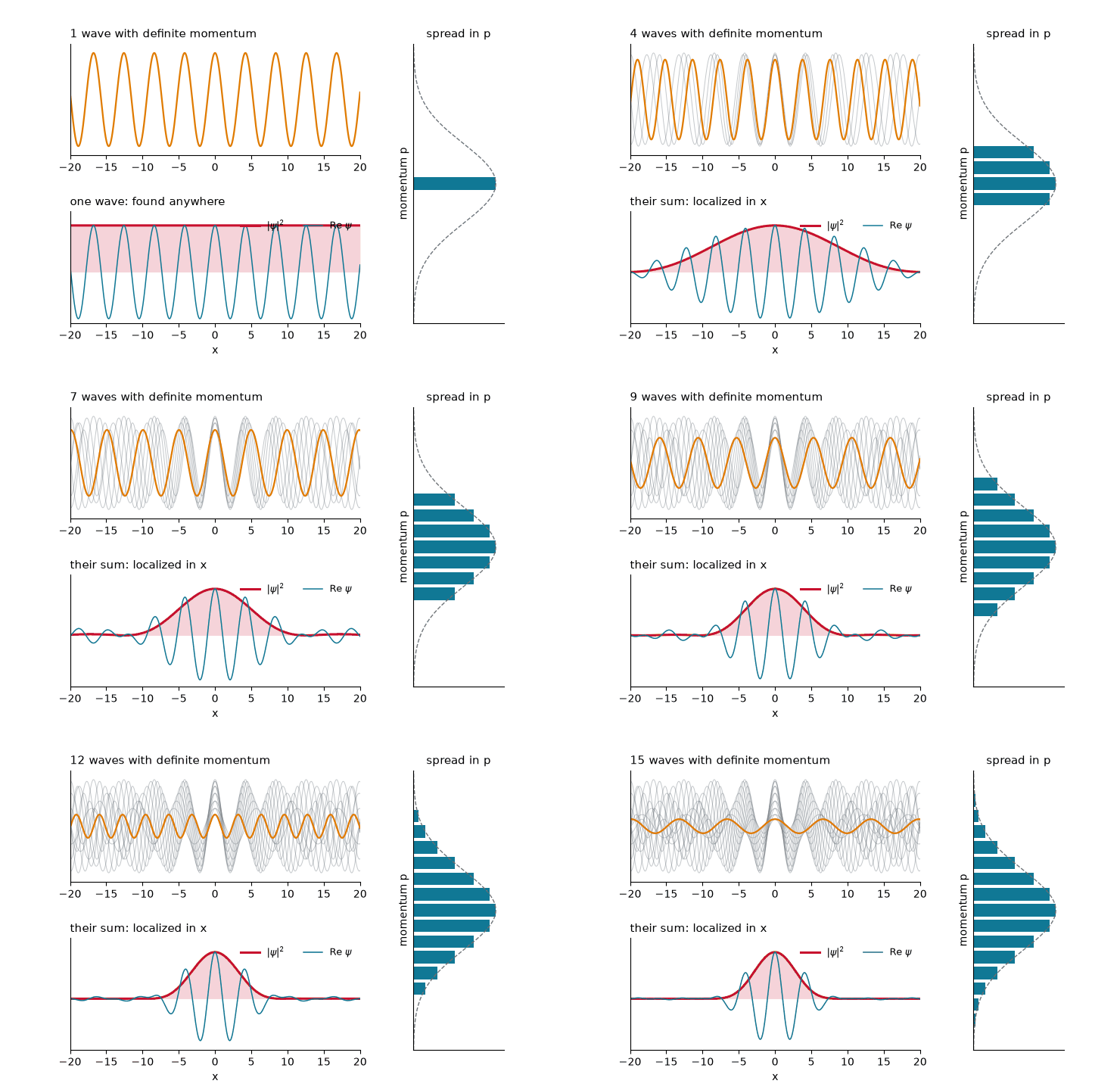
\psi(x) = \sum_k c_k\,e^{ikx}
- One wave: a definite p, found anywhere
- Many waves: localized, but p is spread
- Quantum states are superpositions, so they are blurry
A point becomes a blur
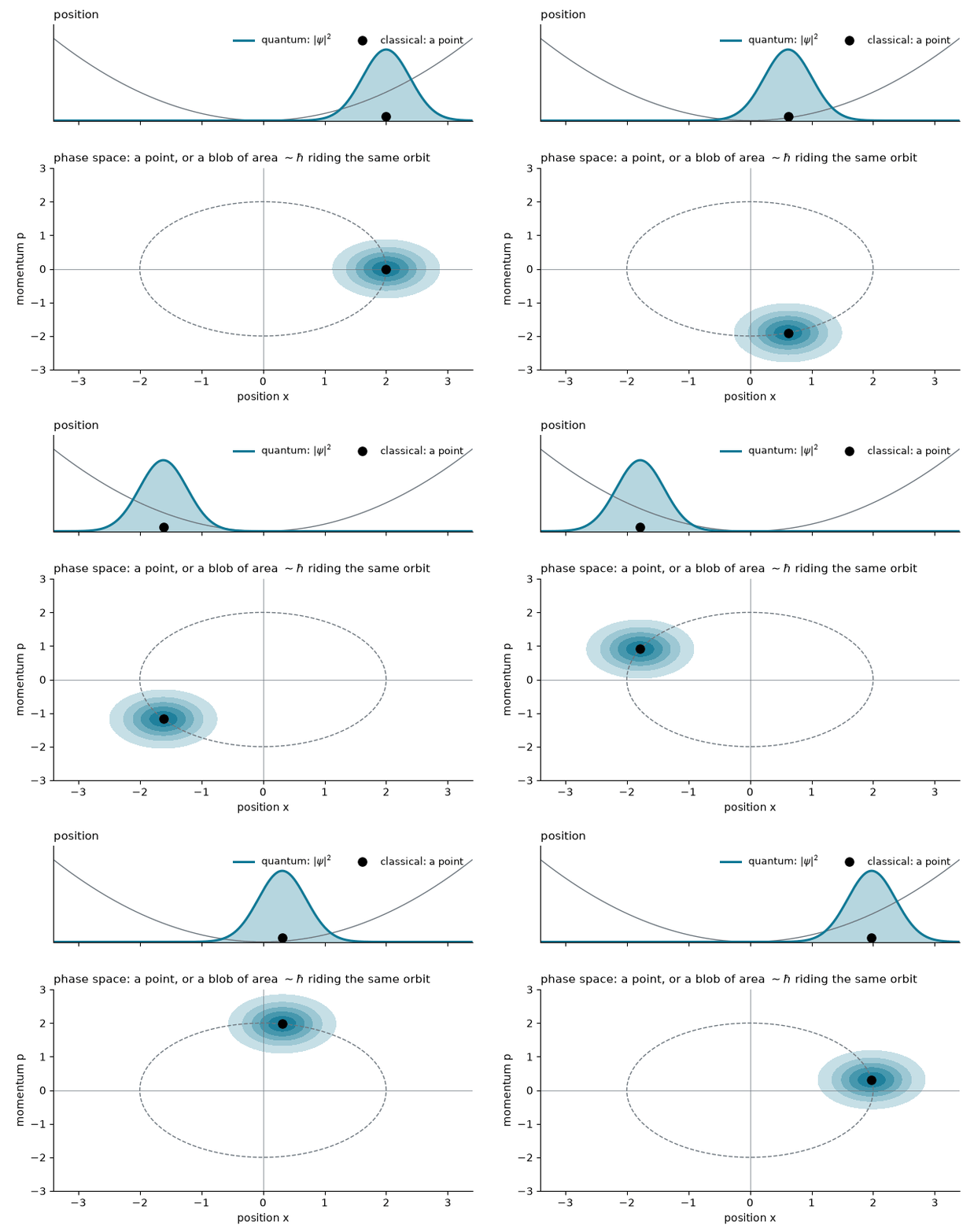
- Classical: a point (x, p) riding its energy curve
- Quantum: a blob of area \sim\hbar riding the same curve
- Its center follows Newton; its width is quantum