The Hartree-Fock Method
Chem 3240 · Lecture 7.3
The Self-Consistent Field
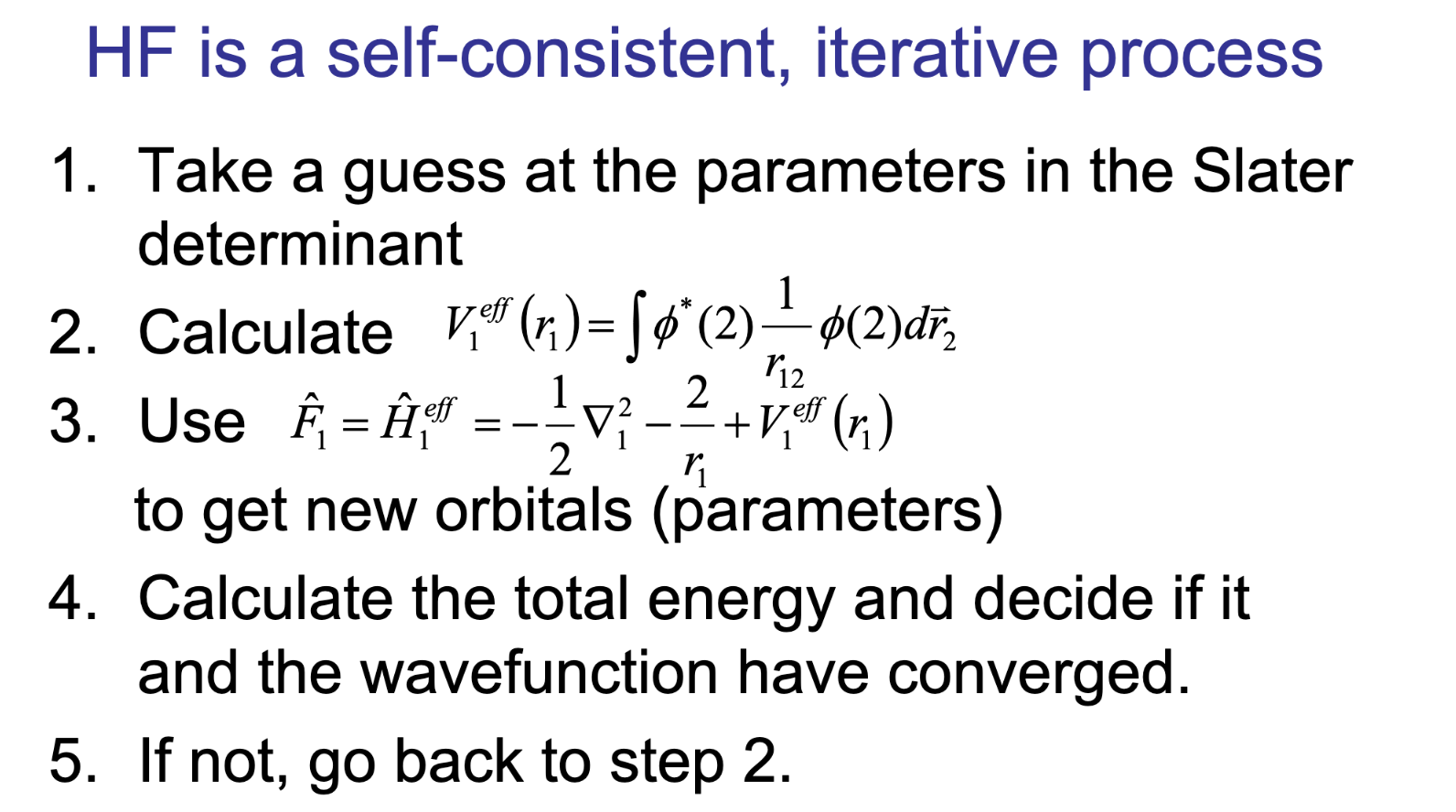
\(\hat{F}\) depends on the very orbitals it determines, so we iterate:
- Guess the orbitals \(\psi_i\).
- Build the Fock operator \(\hat{F}\).
- Solve \(\hat{F}\psi_i = \varepsilon_i\psi_i\).
- Repeat until the orbitals stop changing.
The Mean Field in Action
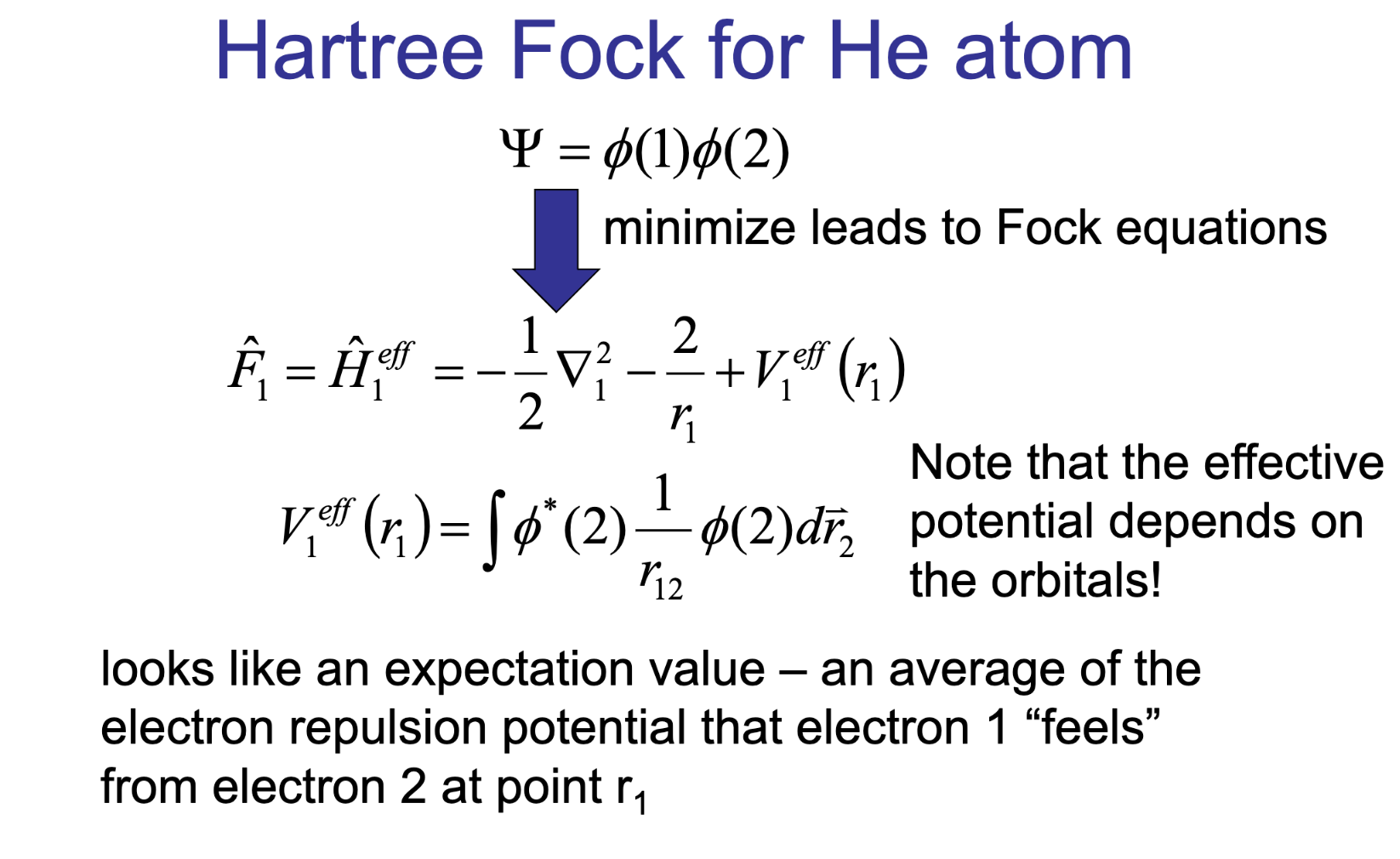
Helium: the simplest closed-shell test.
Each \(1s\) electron moves in the average field of the other.
The two-electron problem splits into two one-electron problems.
The Effective Potential
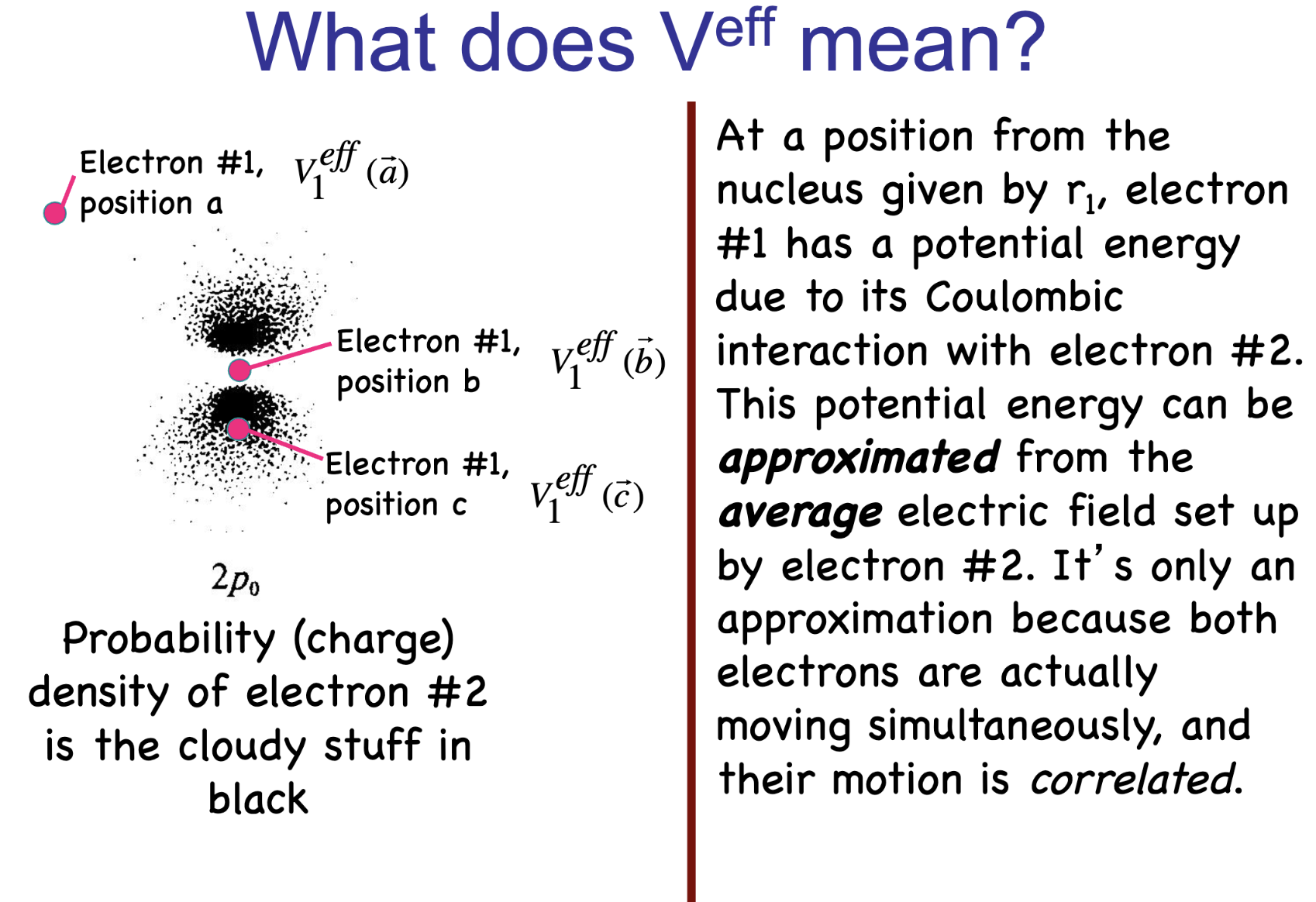
One electron feels the bare nuclear attraction…
…screened by the averaged charge cloud of the other.
The net pull is weaker than the bare nucleus: shielding.