The Wavefunction
The total wavefunction is approximated as a single Slater determinant so that it satisfies the Pauli exclusion principle automatically:
The Hartree-Fock Equations
Each molecular orbital (MO) satisfies the self-consistent field (SCF) equation:
The Fock Operator
The Fock operator is the sum of the one-electron Hamiltonian and a mean-field potential:
contains the kinetic energy and nuclear attraction operators.
is the Coulomb operator (electron, electron repulsion).
is the exchange operator, which arises from the antisymmetry requirement of the wavefunction and has no classical analogue.
The Self-Consistent Field (SCF) Procedure
The Fock operator depends on the orbitals it is meant to determine, so the equations must be solved iteratively:
Guess an initial set of molecular orbitals .
Construct the Fock operator using the current .
Solve the Hartree-Fock equation to obtain new orbitals .
Repeat steps 2 and 3 until convergence, that is, until the orbitals no longer change significantly.
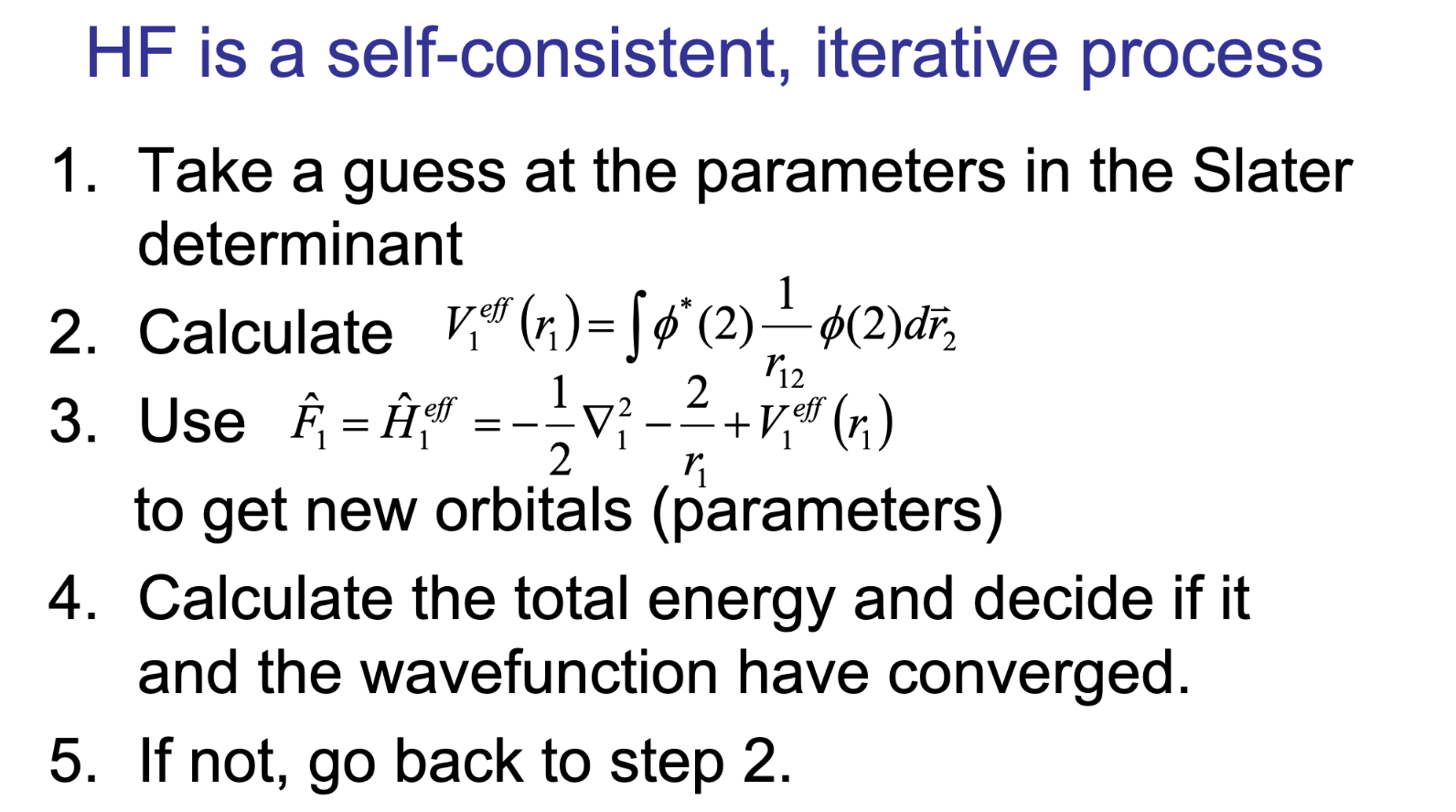
Fig. 1 The self-consistent field cycle. The orbitals define the mean field through the Fock operator, and solving the Fock equation produces updated orbitals; the loop repeats until self-consistency.
Total Energy of the System
The total electronic energy in the Hartree-Fock approximation is:
Hartree-Fock for the Helium Atom
Helium is the simplest closed-shell atom on which to see the method work. Each electron moves in an effective potential, the bare nuclear attraction plus the mean field of the other electron.
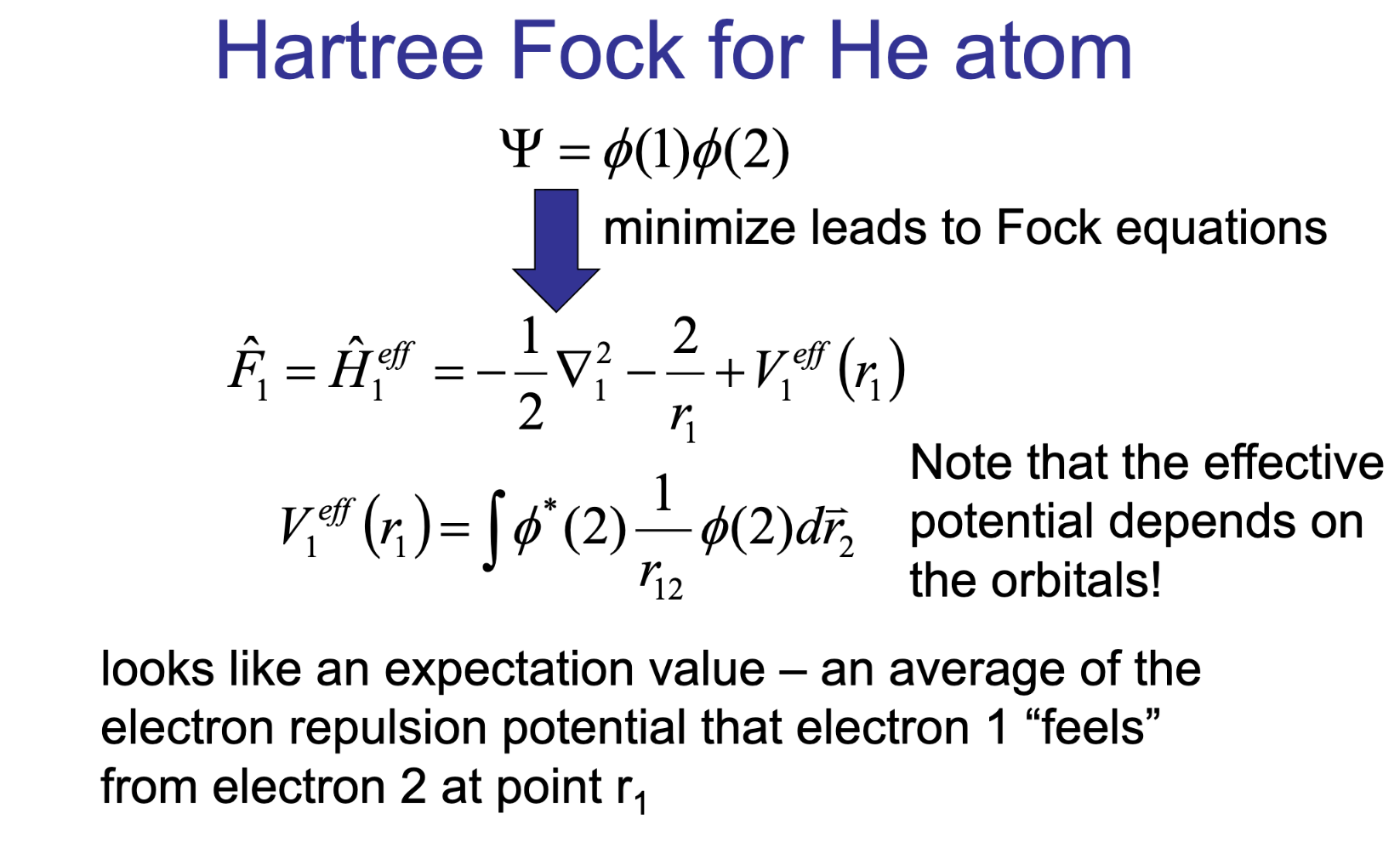
Fig. 2 Hartree-Fock applied to the helium atom: each electron is treated as moving in the average field of the other.
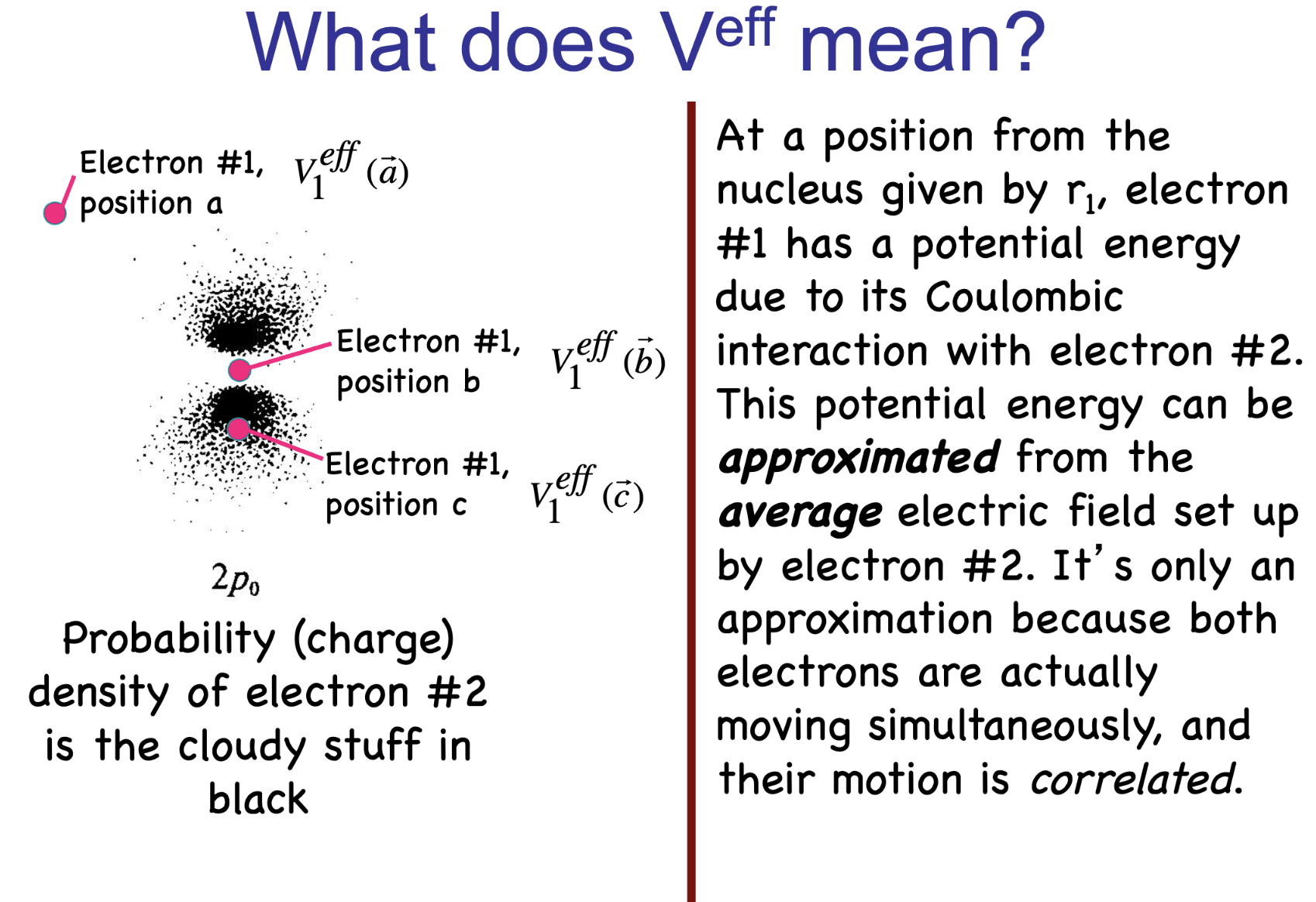
Fig. 3 The effective (mean-field) potential felt by one electron is the nuclear attraction screened by the averaged charge cloud of the other electron.
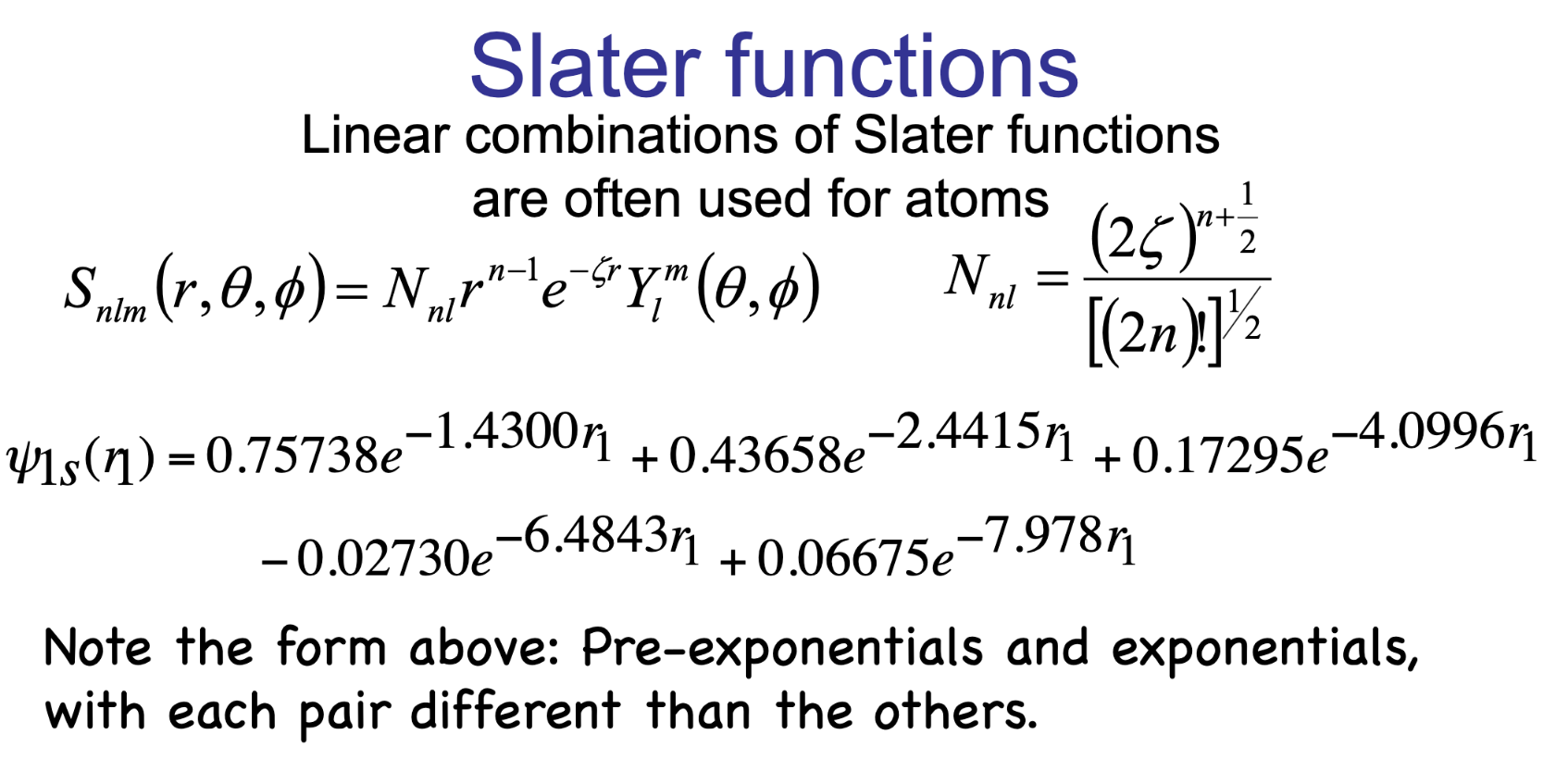
Fig. 4 The antisymmetrized helium wavefunction written as a Slater determinant of spin-orbitals.
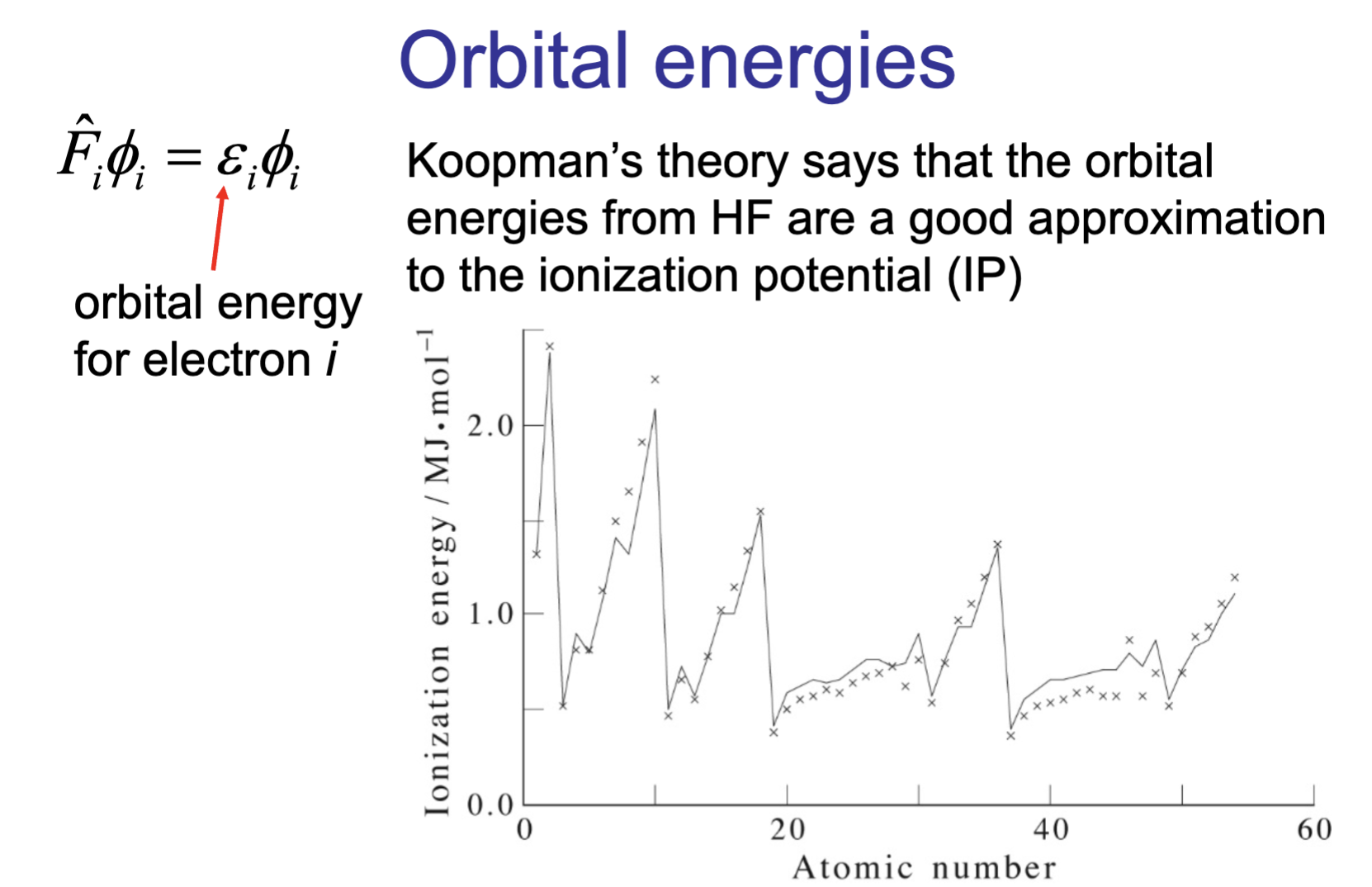
Fig. 5 Orbital energies obtained from the converged Hartree-Fock calculation.
Strengths and Limitations
Strengths
Efficient. It reduces the intractable multi-electron Schrodinger equation to a set of coupled one-electron equations.
Exchange interactions. It includes the effects of exchange exactly through the Slater determinant.
Limitations
No dynamic correlation. Electron, electron correlation is only partially captured, because each electron sees only the average field of the others, not their instantaneous positions.
Post-Hartree-Fock methods. More accurate energies require methods such as MP2 or CCSD that add correlation on top of the Hartree-Fock reference.