What is the nature of light?
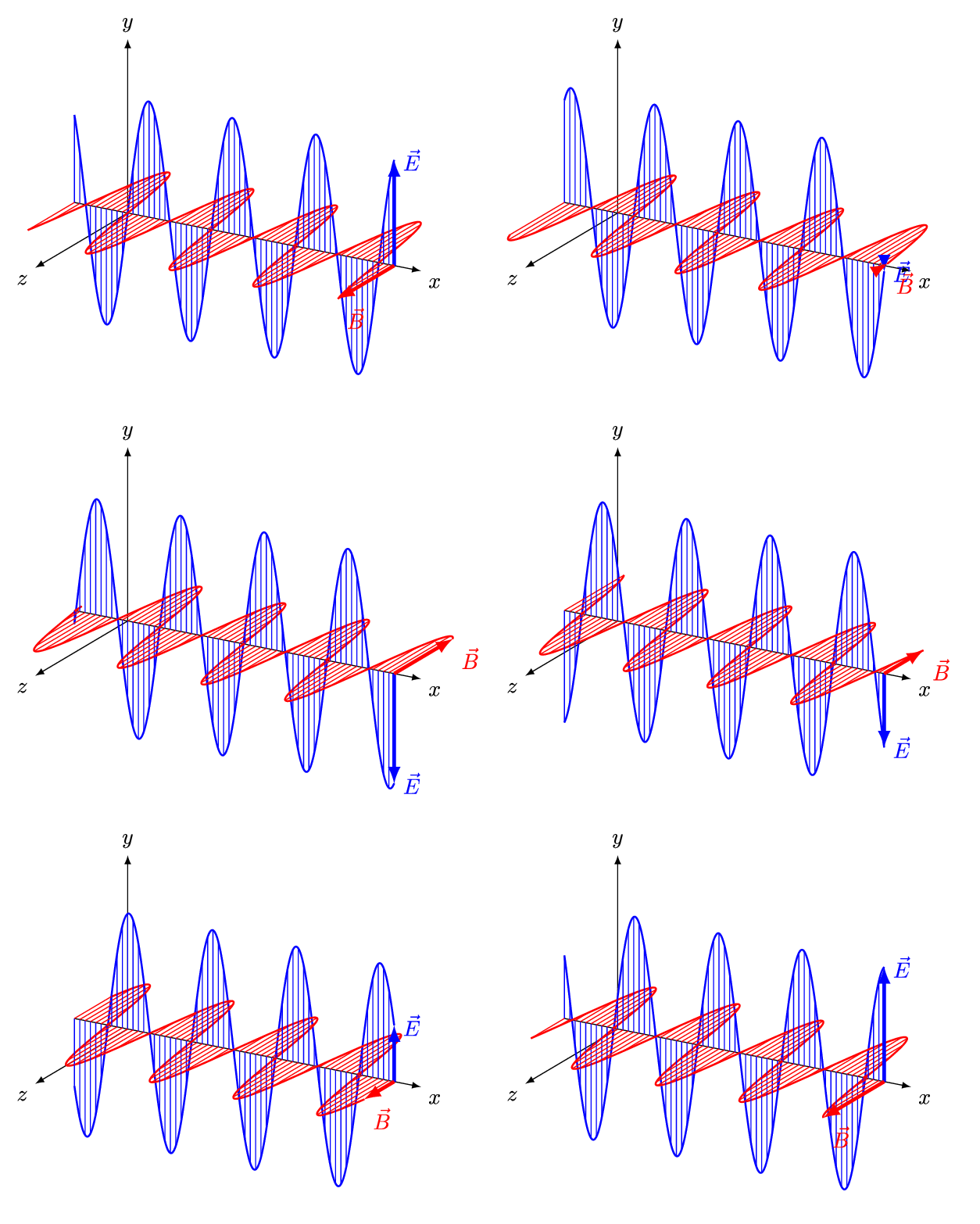
Figure 1:Electromagnetic radiation has perpendicular electric and magnetic components that propagate at the speed of light. Unlike other waves (water, sound), light needs no medium and can travel in vacuum.
According to classical wave theory, light is seen as a traveling wave consisting of electric and magnetic components.
We will soon see that this picture of light as an electromagnetic wave is not the whole story, and radically new ideas are needed to understand a wide variety of phenomena involving the interaction of light with atoms and molecules.
Spectrum of electromagnetic waves
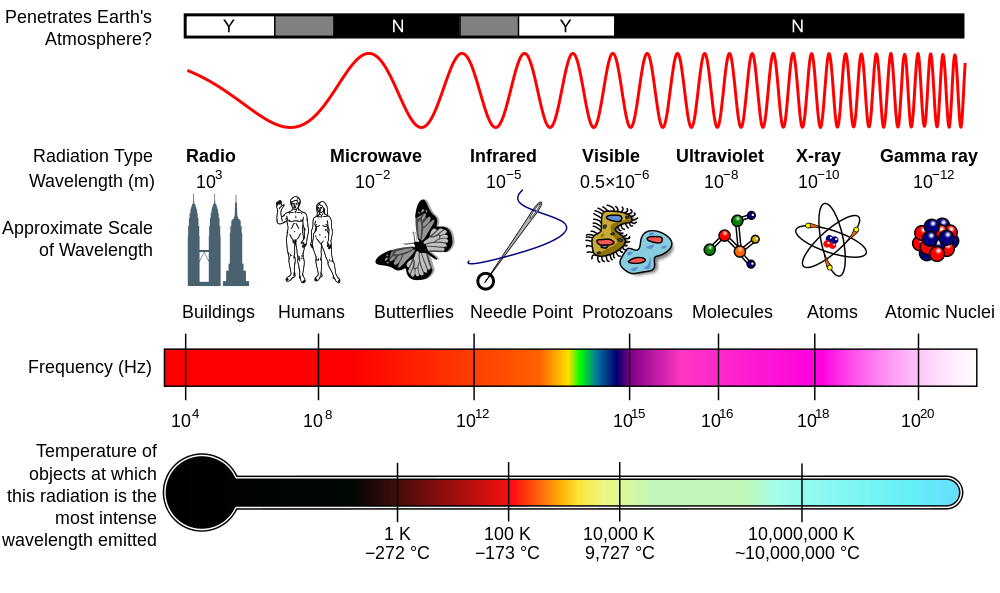
Figure 2:Spectrum of electromagnetic waves showing wavelengths and radiation types, objects whose size is comparable to each wavelength, and the temperatures of objects that radiate at those wavelengths. Note the clear link between how “hot” an object is and how much energy its radiation contains.
Visible light occupies a narrow frequency region in between.
High-frequency waves carry much higher energy. This means X-rays or gamma rays can only be generated by heating “stuff” up to very high temperatures. This happens naturally at the core of the Sun!
Low-frequency waves carry less energy. They can be generated in a “microwave” or by broadcasting antennas.
So what is the relationship between the frequency of radiation and its energy ? This is not such a trivial question. In fact, this very question arose in connection with black body radiation, an experiment that forever changed the course of history by giving birth to quantum mechanics!
Relationship between frequency, wavelength and speed of light.
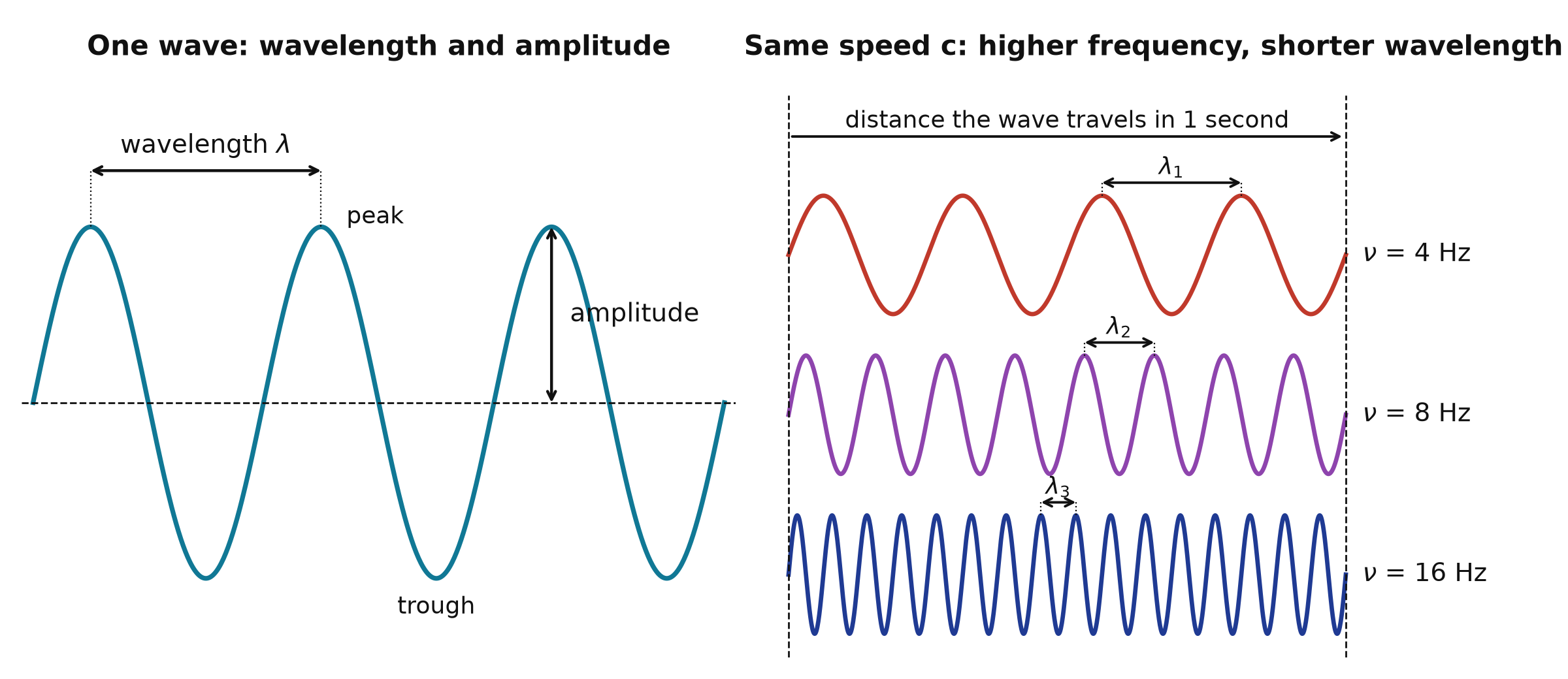
Figure 3:Definitions of wavelength , amplitude, and frequency . At fixed speed a wave with twice the frequency has half the wavelength.
Black body as a model for heated objects.
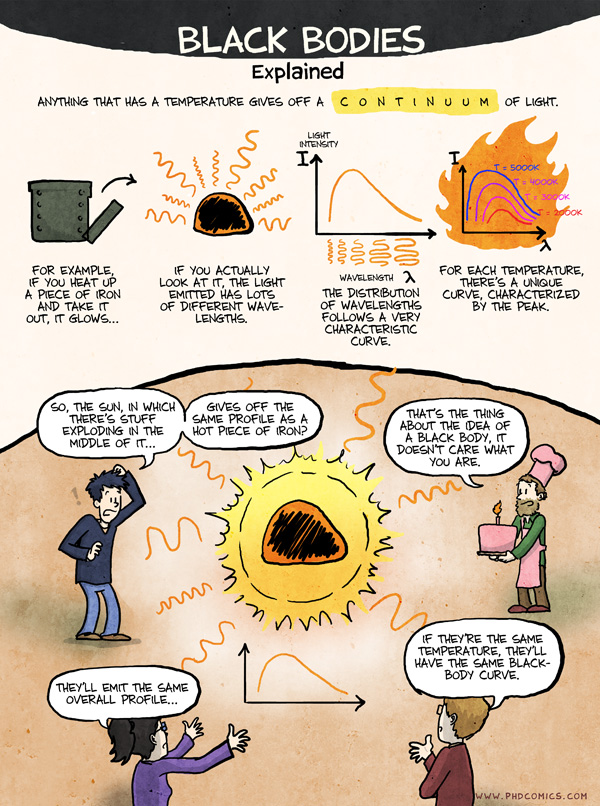
Figure 4:A guide to black body radiation from PhD Comics.
Watch this beautiful animation; the first 3 minutes focus solely on blackbody radiation.
Black body as an idealized model
This model is called a black body because it absorbs every wavelength that hits its surface, therefore appearing as a perfectly black object.
If an object has a color, it is because it reflects certain wavelengths of light, which are then detected by the retina of our eye. The distribution of wavelengths emitted by a black body is determined only by its temperature!
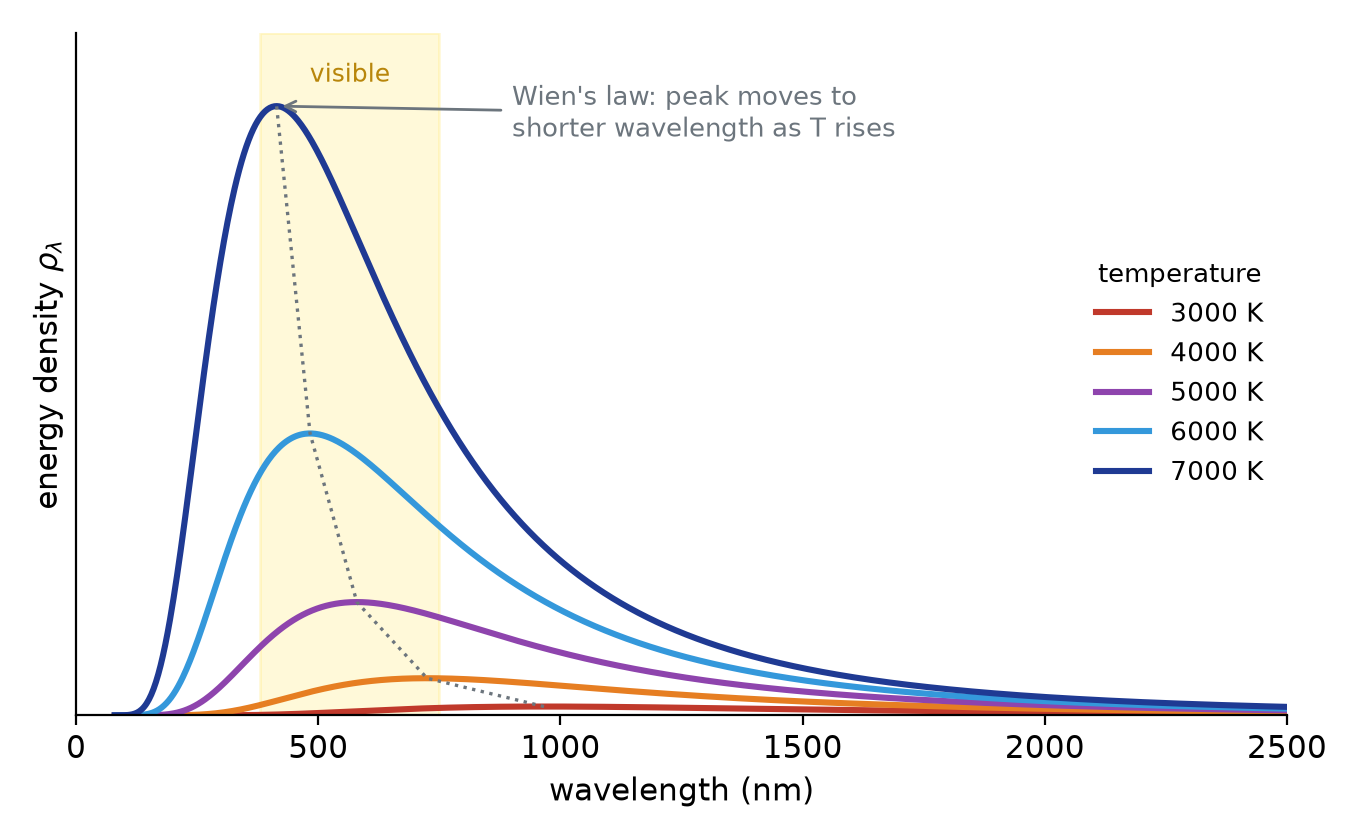
Figure 6:Black body spectra versus wavelength at increasing temperature, colored red to blue. Heating a material does three things: (1) the radiated intensity rises steeply; (2) the peak shifts to shorter wavelengths, following the dotted Wien line; and (3) as the peak crosses the visible band the color changes from red to yellow to white to blue.
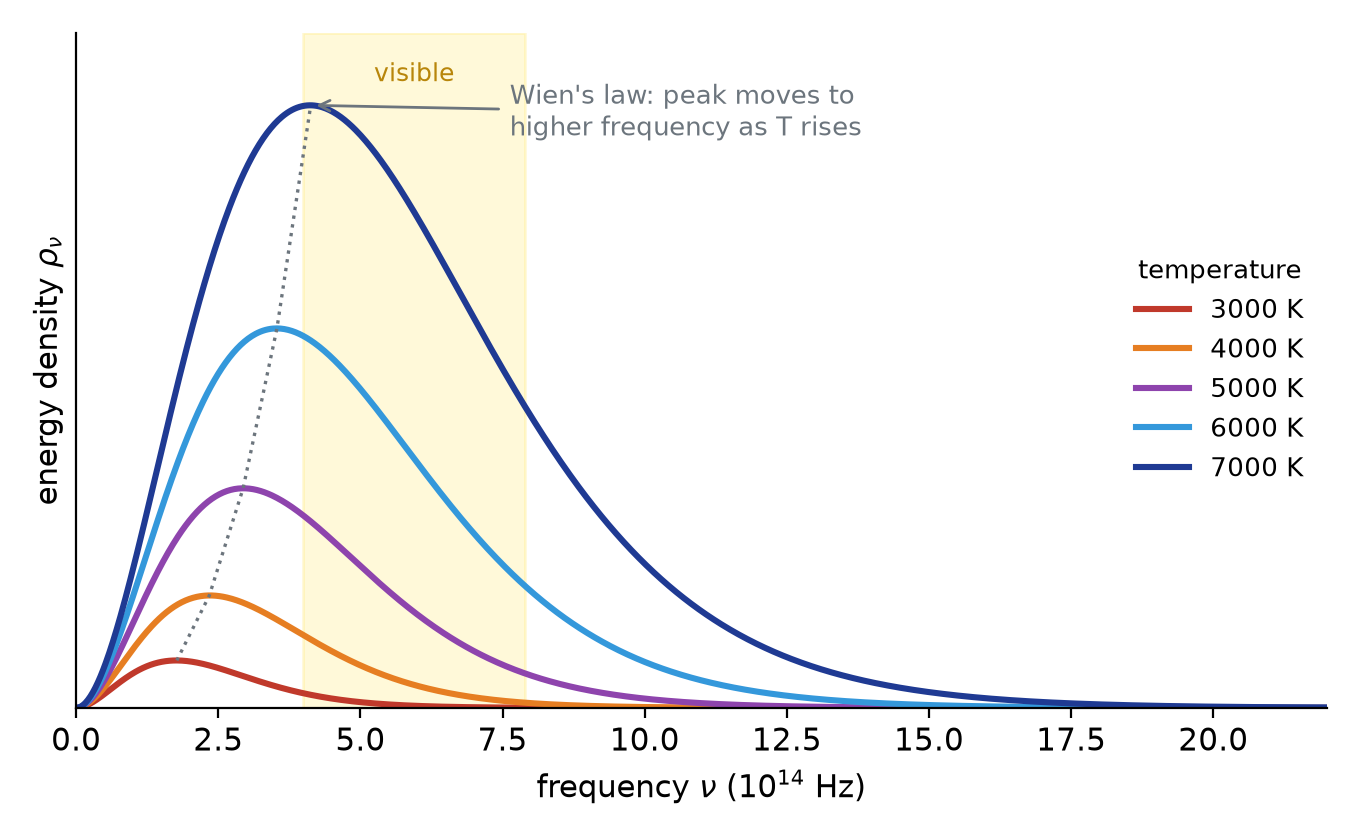
Figure 7:The same spectra plotted against frequency, with . The peak now moves to higher frequency with temperature. Note that the peak frequency is not simply : converting a density per unit wavelength into a density per unit frequency brings in a factor , which shifts where the maximum sits.
Ultraviolet catastrophe of classical mechanics
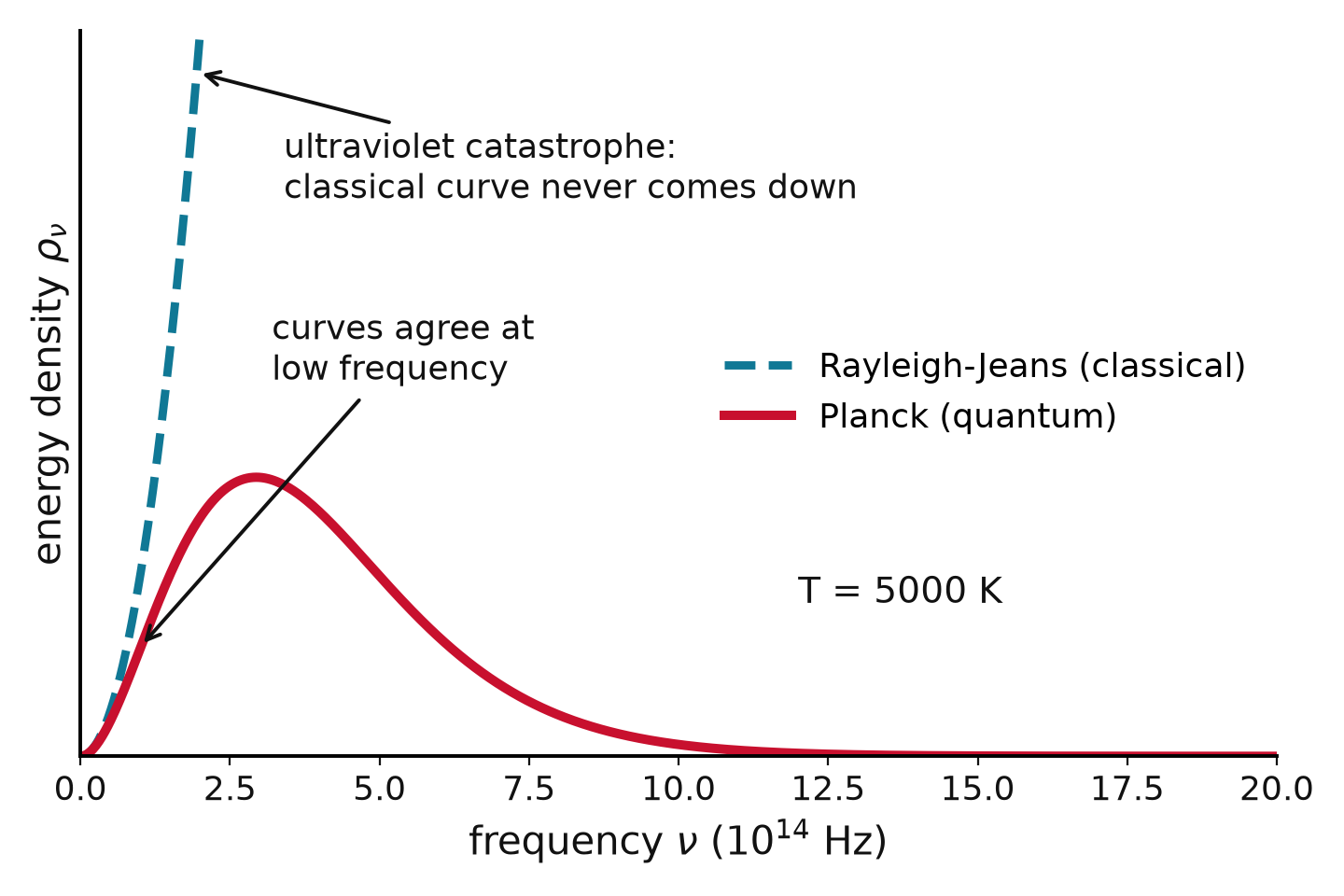
Figure 8:Predictions of classical and quantum mechanics diverge in the high-frequency (short-wavelength) limit: classical mechanics predicts infinite energy, while quantum mechanics predicts insufficient thermal energy for radiation.
What is radiation in classical mechanics? Radiation is considered a wave with frequency . In a heated body, naturally vibrating springs (which represent atoms or molecules) generate waves with the same frequency.
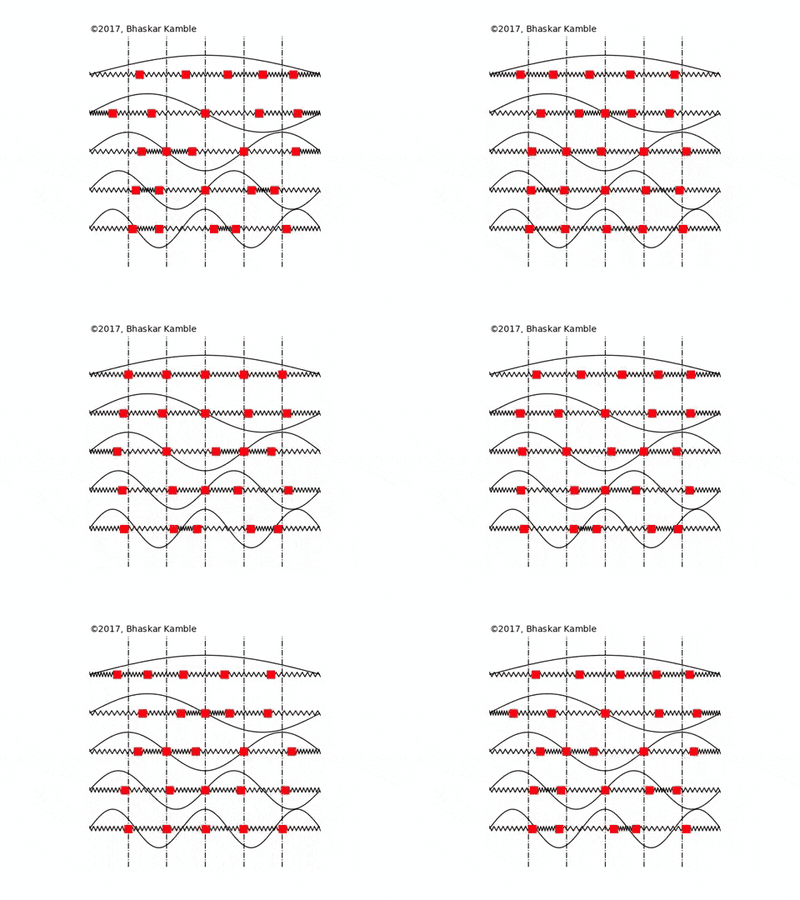
Figure 9:Visualization of atomic vibrations in a solid body. These vibrational modes are called phonons, not to be confused with the photons introduced in the next section. Each mode is one of the dots counted above.
Average mode energy, the classical way: equipartition. From thermodynamics we know that in equilibrium each degree of freedom, or each oscillator, gets the same energy , where is the Boltzmann constant.
Every vibrating spring in a heated body thus has the same energy regardless of frequency. Think about this assumption for a second!
Number of modes in one breath. Shorter waves fit into a box of length more easily than long ones: the number that fit grows as in one dimension, and in three dimensions the wave has to fit along each direction independently, so the count grows as . The number of modes in a thin frequency slice is therefore . The box below fills in the details on this calculation.
Counting the number of modes in a box
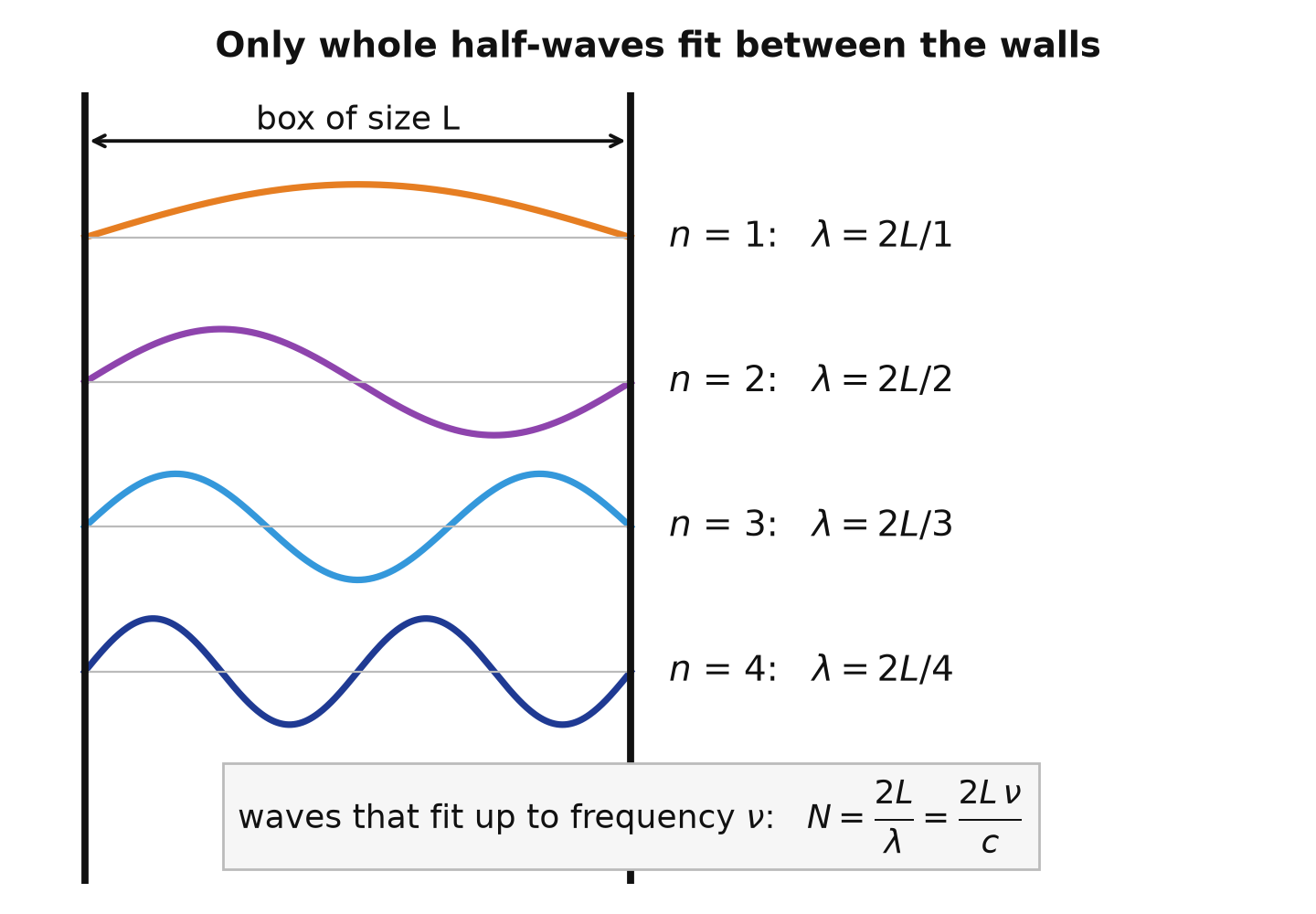
A wave trapped between two walls must vanish at each wall, so only a whole number of half-wavelengths fits: . Shorter waves fit more easily, and the number that fit up to a given frequency grows as .
Where the integers come from. A wave trapped between two walls has to vanish at both walls, like a guitar string pinned at its ends. That is only possible if a whole number of half-wavelengths spans the box, , so the allowed wavelengths are with The integer is nothing more than the number of half-waves that fit.
Shorter waves fit more easily. Since , the allowed frequencies are . Counting all the waves that fit with frequency up to (wavelength down to ) gives : the count grows in proportion to , in inverse proportion to , and in proportion to the size of the box.
Two and three dimensions. In a square box the wave must fit along and along separately, so a mode needs two integers ; in a cube it needs three. The frequency of a mode is set by the distance of the point from the origin, , so the modes with frequency below are the grid points inside a sphere of radius . Their number grows like the size of that region: in one dimension (a line), in two (a quarter disk), in three (an octant of a sphere).
A thin slice. The modes between and form a thin spherical shell whose volume is surface times thickness, . This is all that “more short waves than long waves fit in a box” means.
Result of the counting. Keeping track of the constants (two polarizations of light, only positive integers, so one octant of the sphere, and division by the box volume ) gives the number of modes per unit volume in :
Radiation energy distribution. Putting the two factors of the recipe together, per mode times modes per volume, gives the classical Rayleigh-Jeans law:
Ultraviolet catastrophe. The energy distribution shoots to infinity at high (or low ). This is known as the ultraviolet catastrophe! Integrating over all frequencies gives the total amount of radiation, which in this case is infinite. A light bulb could destroy the universe! Something is off with our classical prediction.
Max Planck and the trick of quantization
In 1900 Planck found that the theoretical curve can very closely match the experimental curve if one postulates that only discrete (quantized) values of energy are possible.
This means atoms and molecules absorb and emit radiation in discrete quantities, multiples of , which are called quanta!
When light is emitted or absorbed, the atom or molecule jumps from one state to another and the energy difference is either coming from light or is used to generate light.
Note how small is in the macroscopic units (such as J s). This is why quantization of energy is hardly noticeable and classical mechanics works so well at the macro scale. In the limit , becomes continuous, and an arbitrary real value of E is allowed. This is the classical limit.
The black body radiation distribution function
Deriving Black Body radiation formula
Planck hypothesized that the energy of oscillators in a black body is quantized and given by:
where is a non-negative integer, is Planck’s constant, and is the frequency. (Planck’s 1900 oscillators start at zero energy; the extra of zero-point energy is a later result of full quantum mechanics that we will meet with the harmonic oscillator.)
The average energy of an oscillator is found by summing over all possible energies, weighted by the Boltzmann factor:
Substituting , the sum becomes:
This sum is a geometric series. For the geometric series of the form:
The sum is given by:
In the context of Planck’s derivation, we use the series:
This series can be summed as:
The series involving in the numerator is:
This can be evaluated using the derivative with respect to :
Substituting , we get:
Using these results, Planck’s formula for the average energy becomes:
The energy density is then obtained by multiplying the average energy by the density of states and the number of oscillators per unit volume:
This is Planck’s law, which describes the spectral density of radiation emitted by a black body in thermal equilibrium at a temperature .
Planck kept the number of modes untouched. Assuming that the energy of an oscillator is quantized, he derived a new average mode energy which, unlike the classical , depends on the frequency of oscillation:
Modes per volume times this average energy gives Planck’s law, a distribution that tends to zero in the high-frequency limit because the exponential in the average energy wins over the of the mode count. The same law can be written per unit frequency or per unit wavelength (substitute and ):
The expressions and have units of energy per volume, which is why they are often referred to as the energy density of radiation. By integrating over the entire spectrum (e.g., all frequencies or wavelengths) we obtain the total energy of radiation per volume!
The power radiated per unit surface area of the black body is the more familiar Stefan-Boltzmann law, , where is the Stefan-Boltzmann constant. Doubling the temperature increases the radiated power sixteenfold. Try it: the shaded area below is the integral, and the readout compares it with the area at 3000 K.
Wien’s displacement law
Connecting the temperature of a black body with wavelength or frequency. The energy density peaks at a wavelength that is inversely proportional to the temperature.
This relationship is described by Wien’s displacement law. You can derive it by setting the derivative , which gives the wavelength at the peak of the distribution.
Explore black body radiation
Drag the temperature and watch three things at once: the Planck curve (solid) rises and its peak slides to shorter wavelengths, following Wien’s law; the visible band lights up only above a few thousand kelvin; and the classical Rayleigh-Jeans prediction (dashed) agrees with Planck at long wavelengths but shoots off the top of the plot at short ones. That divergence is the ultraviolet catastrophe.
Applications of Black Body radiation
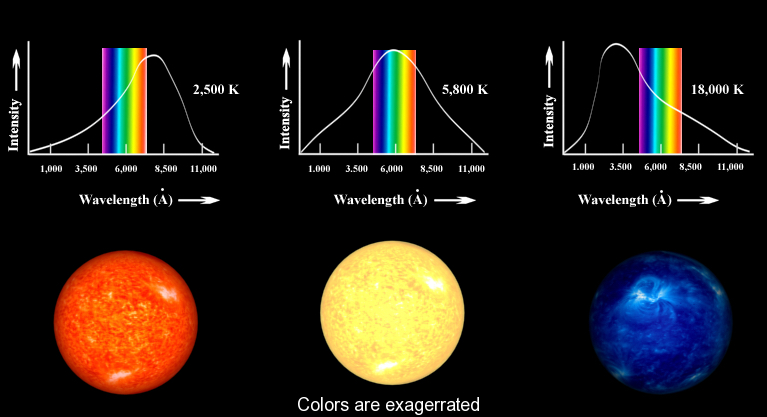
Figure 11:The black body is used as a standard against which the absorption of real bodies is compared. To a good approximation, stars radiate like black bodies, so we can use blackbody radiation as a model to infer the temperatures of stars from their colors. Find out more in this video on Visible Light Waves.
Rayleigh Scattering and the Color of the Sky
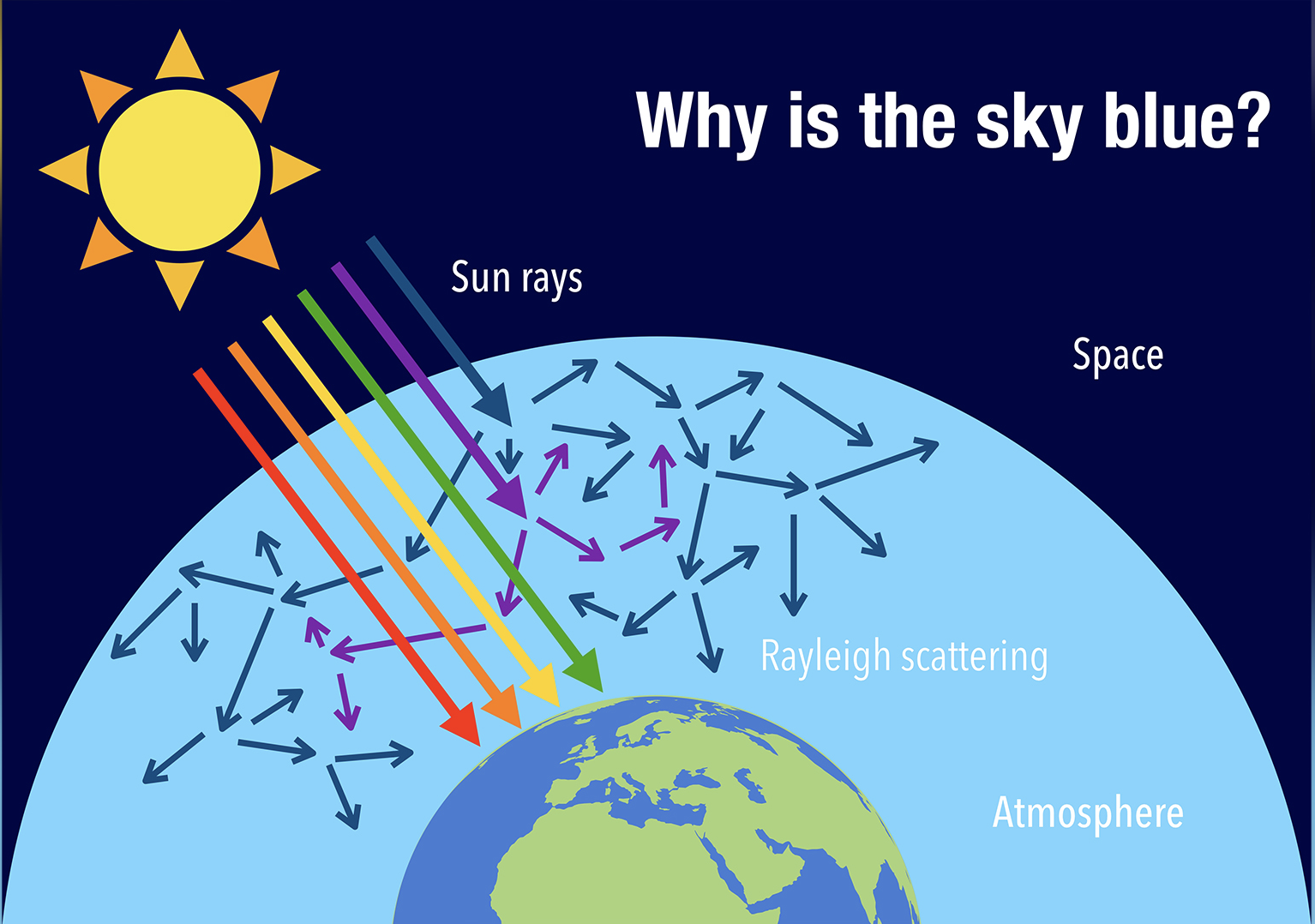
Figure 12:Preferential scattering of shorter wavelengths biases the color of the sky toward blue.
Problems
Problem 1: Why is the sky blue and not violet?
If hotter objects radiate more strongly at shorter wavelengths, why does the daytime sky appear blue instead of violet (or even ultraviolet)?
Solution
The Sun’s spectrum indeed peaks in the green/yellow (≈500 nm), and it emits significant violet and ultraviolet.
However:
Rayleigh scattering in the atmosphere is much stronger at shorter wavelengths (scattering ).
Human eyes are more sensitive to blue than violet.
Most ultraviolet is absorbed by the ozone layer.
Thus, the scattered light that reaches us is predominantly blue.
Problem 2: Color of a 3000 K black body
A blackbody has temperature . According to Wien’s law, what is the approximate color of its peak emission?
Red/Orange
Green
Blue
Ultraviolet
Solution
Using , the peak is in the infrared, but the visible portion is dominated by the red/orange end.
Correct choice: (1) Red/Orange.
Problem 3: Wavelength from photon energy
For a monochromatic (single wavelength) radiation with an energy of calculate the wavelength. Use Planck’s equation to relate the energy of radiation to its wavelength. The values of constants are:
Planck’s constant,
Speed of light,
Solution
First, convert the energy of the radiation from electron volts (eV) to joules (J):
Now, use Planck’s equation to relate the energy of the photon to its wavelength :
Rearranging to solve for :
Substitute the known values:
The wavelength of the radiation is approximately , which is in the ultraviolet range of the electromagnetic spectrum.
Problem 4: Peak of the solar spectrum
Using Wien’s displacement law, determine the wavelength at which the spectral radiance of a blackbody is maximized. Calculate for , approximately the temperature of the Sun’s surface.
Solution
Problem 5: Star colors as thermometers
Betelgeuse looks distinctly red, Rigel blue-white. Their spectra peak near 830 nm and 240 nm respectively. Estimate the surface temperature of each star. Which of the two radiates more power per square meter of surface, and by what factor?
Problem 6: Counting photons
A red laser pointer emits 1.0 mW at 650 nm. How many photons leave it per second? Compare with the number of photons per second in a 1.0 mW beam of X-rays with wavelength 0.10 nm. In which beam is the “graininess” of light easier to detect?
Problem 7: Where the classical formula hides inside Planck’s
Expand for and show that Planck’s average oscillator energy reduces to the classical equipartition value . Then examine the opposite limit, , and show that the average energy dies off exponentially. Explain in one sentence why this second limit is what cures the ultraviolet catastrophe.
Problem 8: The Sun’s power output
The Sun has radius m and a surface temperature of about 5770 K. Treating it as a black body, use the Stefan-Boltzmann law to compute its total radiated power. The Earth is m away; what power per square meter arrives at the top of our atmosphere? (The measured value, the solar constant, is about 1360 W/m.)
Reference Table of Constants
| Constant | Symbol | Value |
|---|---|---|
| Speed of light | ||
| Planck’s constant | ||
| Boltzmann constant | ||
| Stefan-Boltzmann constant | ||
| Wien’s displacement constant |
Extra: quantized oscillators explain heat capacities too
Einstein’s 1907 heat capacity model (optional reading)
Planck’s quantized oscillator did more than fix the radiation curve. Classical equipartition says every atom in a solid, vibrating in three directions, stores of energy, so the molar heat capacity should be a constant J/(mol K). This is the Dulong-Petit law, and it works at room temperature for most metals.
Yet measurements showed falling toward zero as , and diamond fell far short of even at room temperature. Classical physics had no answer.
In 1907 Einstein modeled each atom as a Planck oscillator of frequency and replaced with Planck’s average energy. Differentiating with respect to gives
The Einstein temperature marks where quantization kicks in: for the formula returns Dulong-Petit, for the oscillators freeze out and . Diamond’s stiff bonds give a large , hence a high , which is why it looks “quantum” already at room temperature.
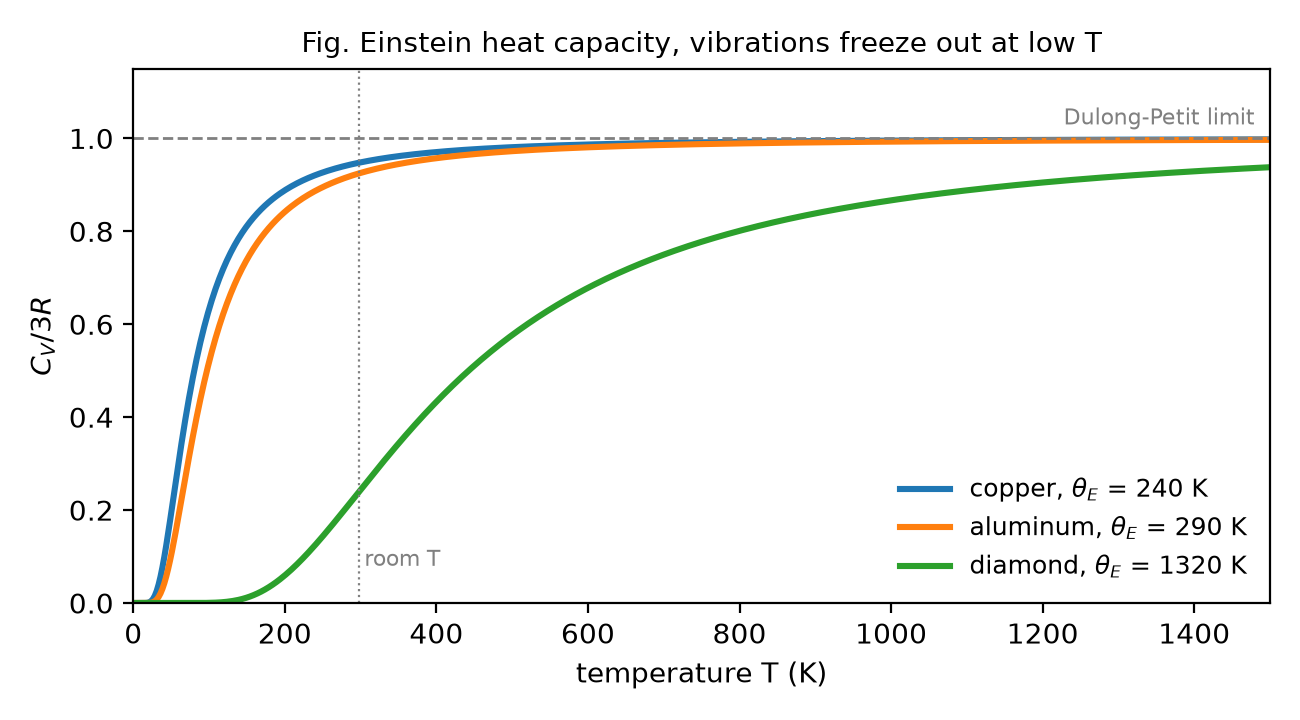
Einstein heat capacity of three solids. Vibrations freeze out below the Einstein temperature, and diamond is still far from the classical limit at room temperature.
- González de Arrieta, I. (2022). Beyond the infrared: a centenary of Heinrich Rubens’s death. The European Physical Journal H, 47, 11. 10.1140/epjh/s13129-022-00044-x
- Hoffmann, D., & Friedrich, B. (2026). Max Planck (1858–1947): A Revolutionary Against His Will. Natural Sciences, 6(3). 10.1002/ntls.70077