Orbitals of homonuclear diatomic molecules
Which atomic orbitals mix to form molecular orbitals, and what are their relative energies? The interactive viewer below can be used to obtain the energy order of molecular orbitals and indicates the atomic orbital limits.
The non-crossing rule
States with the same symmetry never cross.
| Bonding orbitals: | , , , etc. |
|---|---|
| Antibonding orbitals: | , , , etc. |
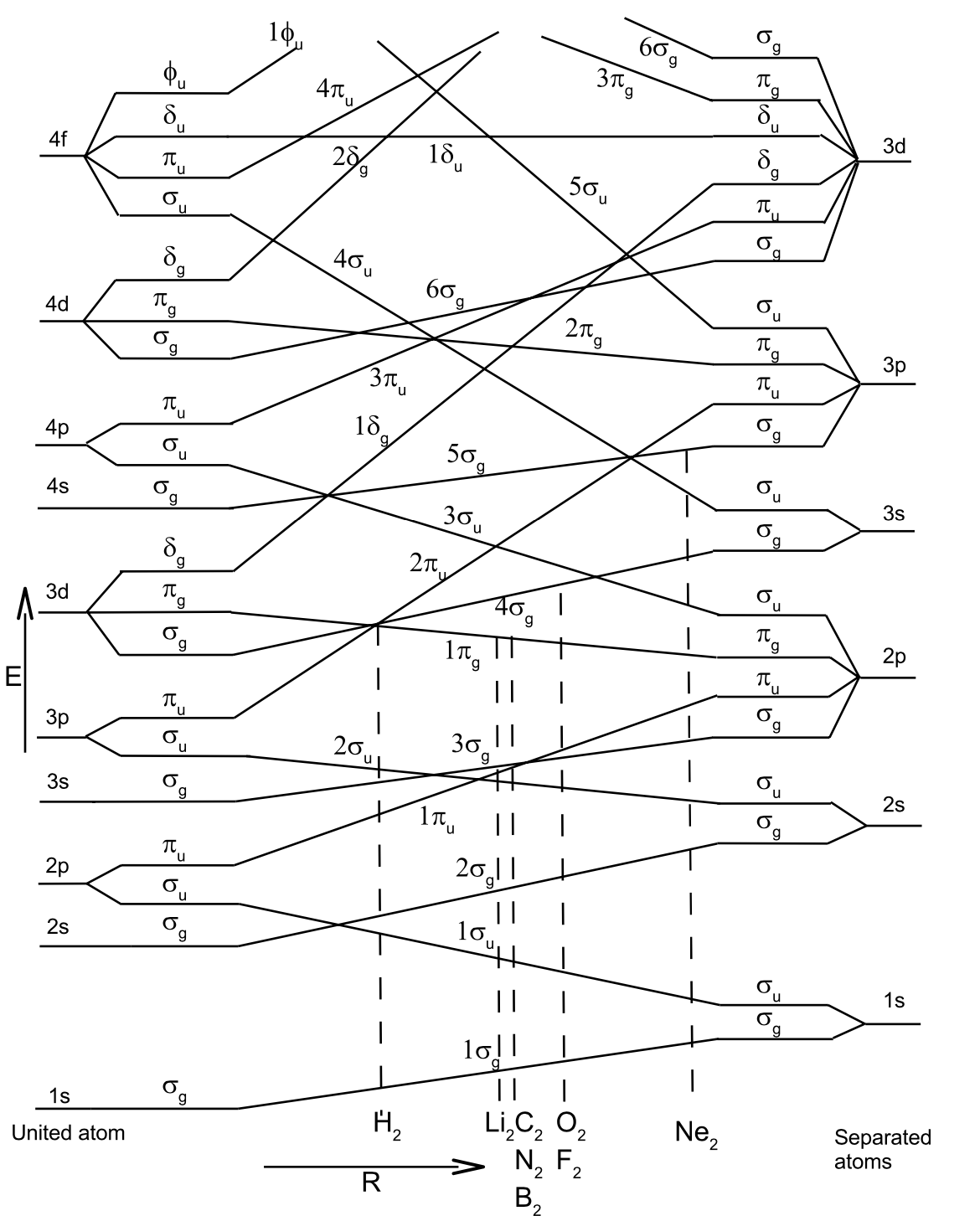
Fig. 1 Correlation diagram illustrating the non-crossing rule: orbitals of the same symmetry avoid each other as the internuclear distance changes.
Table of molecular orbitals
The orbitals are filled with electrons in order of increasing energy. Note that , , etc. orbitals can hold a total of 4 electrons. If only one bond is formed, we say that the bond order (BO) is 1. If two bonds form (for example, one and one ), the bond order is 2 (a double bond). Molecular orbitals always come in pairs: bonding and antibonding.
| Molecule | Electrons | Configuration | Term sym. | BO | (Å) | (eV) |
|---|---|---|---|---|---|---|
| 1 | 0.5 | 1.060 | 2.793 | |||
| 2 | 1.0 | 0.741 | 4.783 | |||
| 3 | 0.5 | 1.080 | 2.5 | |||
| 4 | 0.0 | |||||
| 6 | 1.0 | 2.673 | 1.14 | |||
| 8 | 0.0 | |||||
| 10 | 1.0 | 1.589 | ||||
| 12 | 2.0 | 1.242 | 6.36 | |||
| 13 | 2.5 | 1.116 | 8.86 | |||
| 14 | 3.0 | 1.094 | 9.902 | |||
| 15 | 2.5 | 1.123 | 6.77 | |||
| 16 | 2.0 | 1.207 | 5.213 | |||
| 18 | 1.0 | 1.435 | 1.34 | |||
| 20 | 0.0 |
The valence bond approach
The valence bond method is an approximate approach that is useful for understanding the formation of chemical bonds. In particular, concepts like hybrid orbitals follow directly from it.
The valence bond method is based on the idea that a chemical bond forms when there is non-zero overlap between the atomic orbitals of the participating atoms. The atomic orbitals must therefore have the same symmetry in order to gain overlap.
Hybrid orbitals are essentially linear combinations of atomic orbitals that belong to a single atom. Note that hybrid orbitals are not meaningful for free atoms, as they only begin to form when other atoms approach. The idea is best illustrated through the following examples.
Example 1: The molecule
The Be atom has the atomic electron configuration He. The two approaching hydrogens perturb the atomic orbitals, and the two outer-shell electrons reside on the two hybrid orbitals formed (the -axis is along the molecular axis):
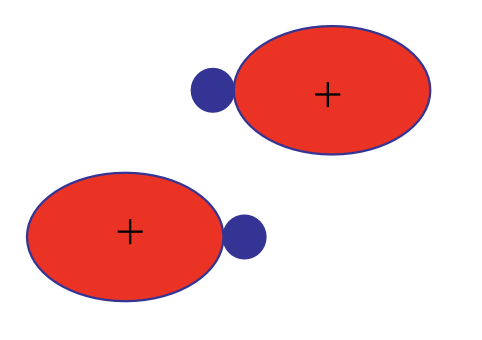
Fig. 2 Formation of hybrid orbitals on the Be atom in .
The hybrid orbitals further form two molecular orbitals:
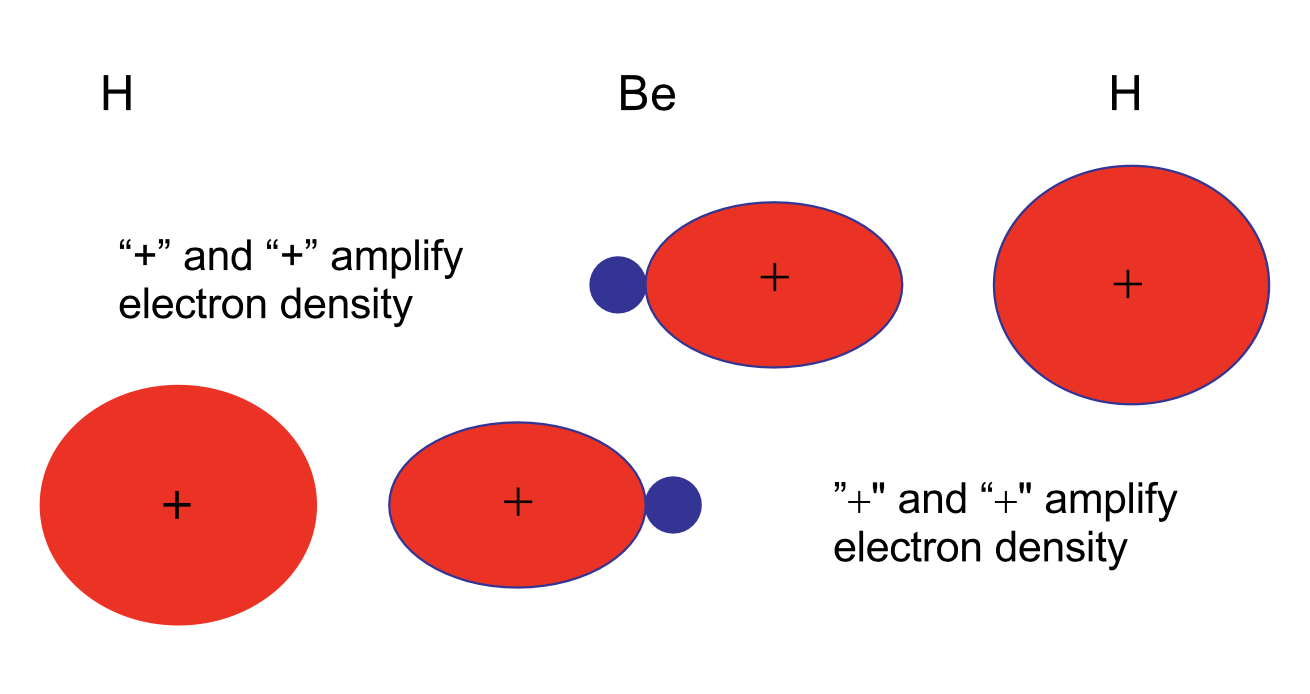
Fig. 3 The hybrids on Be each form a bond with a hydrogen 1s orbital.
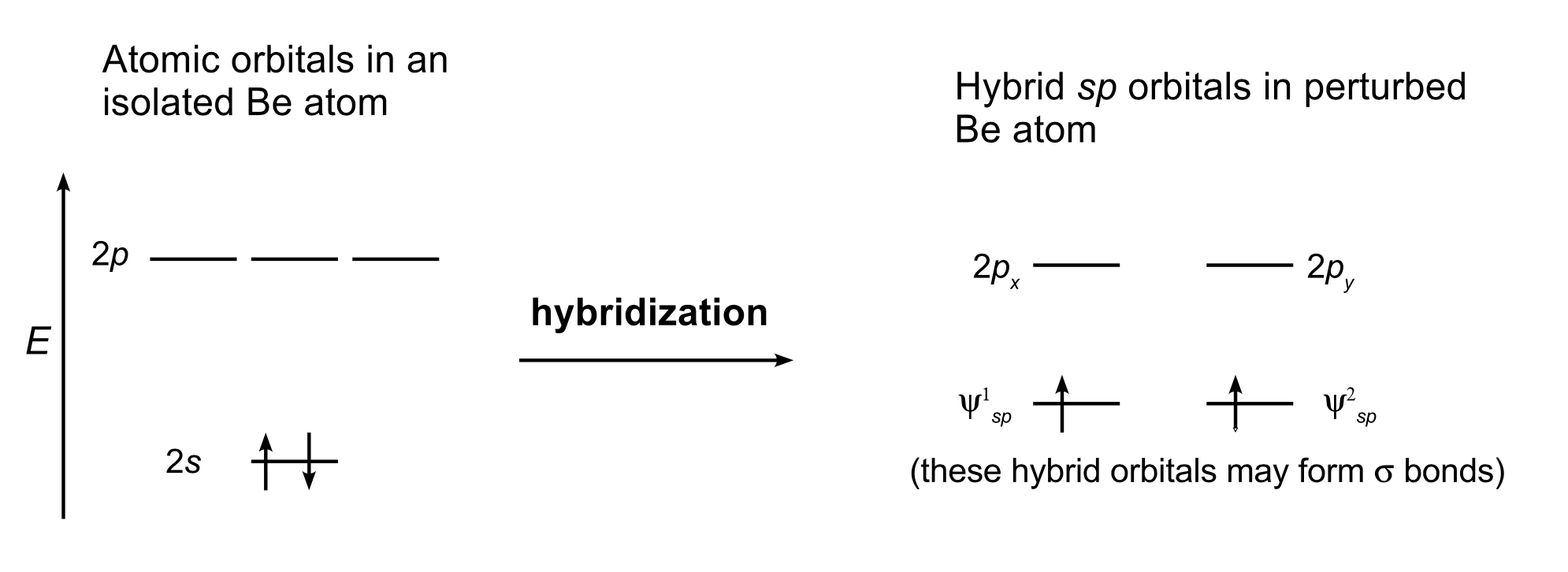
Fig. 4 The resulting linear framework of .
This form of hybridization is called . It means that one and one orbital participate in forming the hybrid orbitals. For hybrids, linear geometries are favored, and here H-Be-H is indeed linear. Each MO between Be and H contains two shared electrons. Note that the number of initial atomic orbitals and the number of hybrid orbitals formed must be identical: here and atomic orbitals give two hybrid orbitals. Hybrid orbitals should be orthonormalized.
Example 2: The molecule
All the atoms lie in a plane (a planar structure), and the angles between the H atoms are . The boron atom has electron configuration . Three atomic orbitals (, , ) participate in forming three hybrid orbitals:
The three orbitals can have the following spatial orientations:
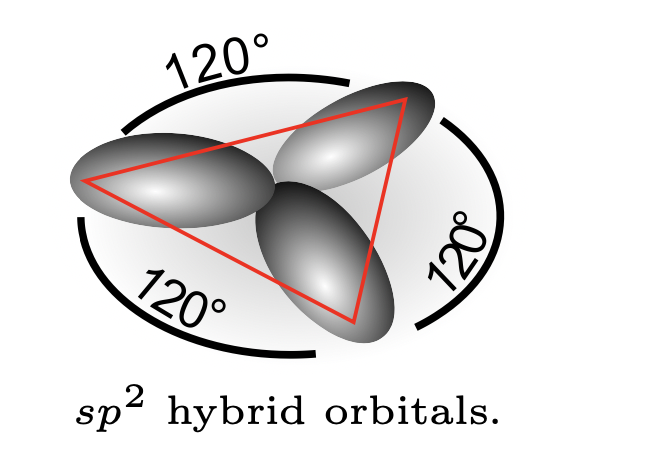
Fig. 5 The three hybrid orbitals of point to the corners of an equilateral triangle.
Each of these hybrid orbitals forms a bond with an H atom. This is called hybridization, because two orbitals and one orbital participate in the hybrid.
Example 3: The molecule
The electron configuration of the carbon atom is . The four outer valence electrons should be placed in four hybrid orbitals:
These four hybrid orbitals form bonds with the four hydrogen atoms.
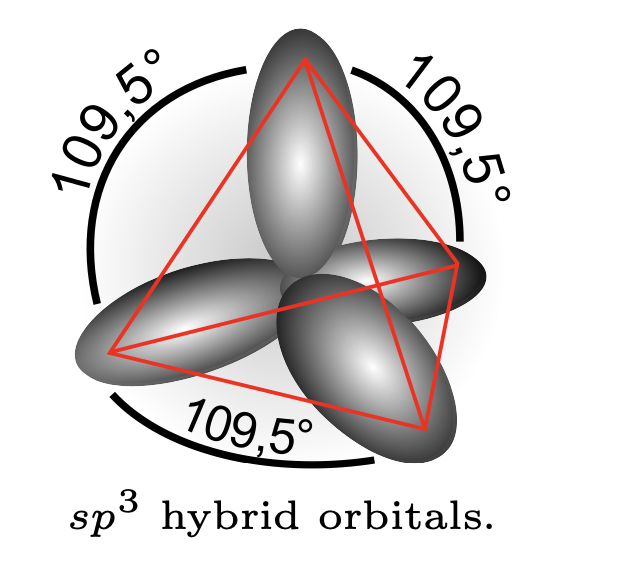
Fig. 6 The four hybrids of point to the corners of a tetrahedron.
The hybridization is directly responsible for the tetrahedral geometry of the molecule. Note that for other elements with -orbitals, one can also obtain bipyramidal (coordination 5) and octahedral (coordination 6) structures.
Example 4: The molecule
The oxygen is hybridized, with O atom electron configuration . Two of the four hybrid orbitals are doubly occupied with electrons from the oxygen atom, and the remaining two hybrid orbitals participate in bonding with the two H atoms. This predicts the bond angle H-O-H to be (experimental value ). Thus has two lone pairs of electrons.
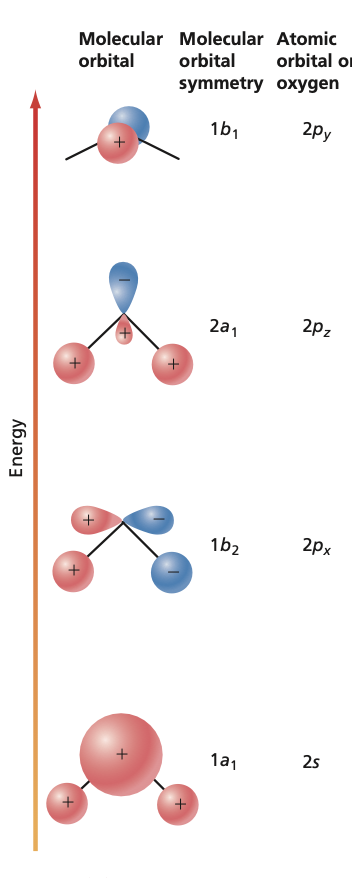
Fig. 7 The hybrid framework of the water molecule.
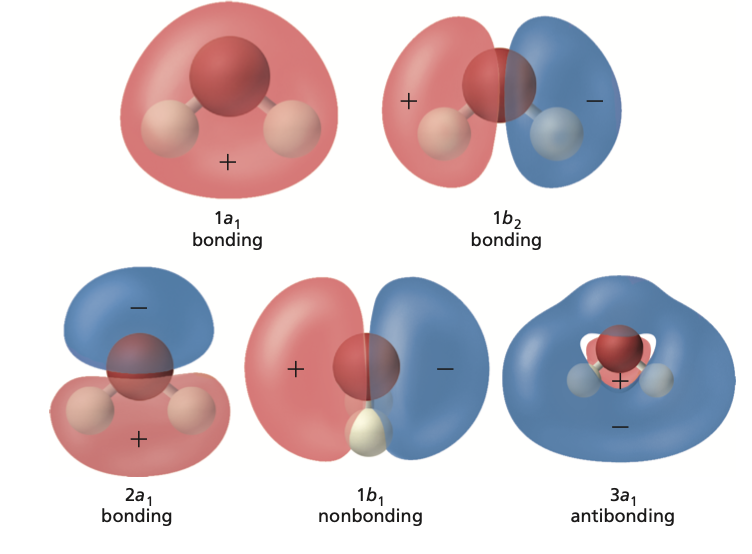
Fig. 8 Bonding and lone-pair orbitals of water.
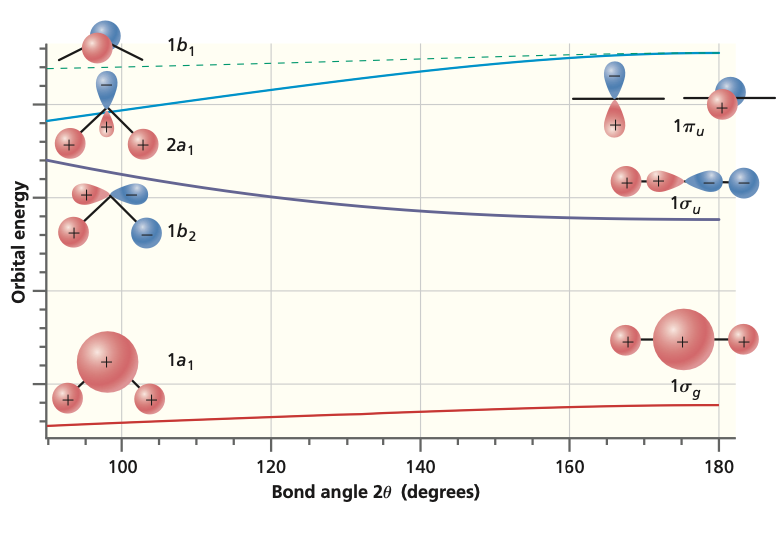
Fig. 9 The occupied molecular orbitals of water.
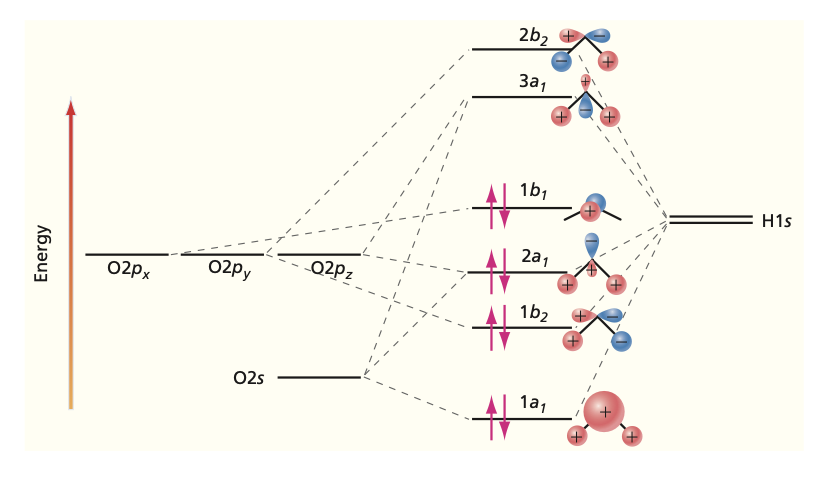
Fig. 10 Molecular orbital diagram for the water molecule.
Other molecules
Numerical calculations
In numerical quantum chemical calculations, basis sets that resemble linear combinations of atomic orbitals are typically used (LCAO-MO-SCF). The atomic orbitals are approximated by a group of Gaussian functions, which allow analytic evaluation of the integrals appearing, for example, in the Hartree-Fock (SCF; HF) method. Note that hydrogenlike atomic orbitals differ from Gaussian functions by the power of in the exponent. A useful rule for Gaussians: the product of two Gaussian functions is another Gaussian function.